5th Summer School on Samothraki
Aquatic & Social Ecology: Theory and Practice
When: 3-12 June 2018
Where: Samothraki Island, Aegean Sea, Greece
This course primarily addresses students with some post-graduate research experience (Master’s Degree level or in course for post-graduate work) from both the natural and social sciences. Students should express an interest in sustainability and local developmental challenges. Eligible candidates will be chosen in order to help our long-term research and conservation cause on the island. It will be a ten-day educational extravaganza on Samothraki!
Historic background
Most of Samothraki, including most of the sea around it, is a Natura 2000 protected area. There are several important conservation issues of serious concern here (search this blog with the key-work "Samthraki" for example). At Samothraki researchers from the Vienna Institute of Social Ecology, Alpen Adria University (
www.aau.at/socec) have been studying the social metabolism of the island since 2007 and some of the professors have been visiting the island form many years before this. These scientists along with several Greek scientists and interested locals have created an important linking-network that aims to support conservation on Samothraki, including the designation of a Biosphere Reserve for the whole island (see
http://sustainable-samothraki.net/). Furthermore, the island is a long-term study area (LTER) established by researchers working primarily on inland water studies from the Hellenic Centre of Marine Research - HCMR (
www.imbriw.hcmr.gr), the Greek government's official aquatic and marine research organization (
http://www.hcmr.gr/en/). Samothraki Nature Observatory (SNO) is a special research project and collaboration between HCMR and the Municipality of Samothraki aiming to research, promote, manage and protect its natural heritage (
http://samothraki-observatory.hcmr.gr/). Our team from HCMR has been fascinated with the island- it's a research and conservation education laboratory.
This is the fifth year this 'SUMMER UNIVERISITY' organization is happening. Its a non-profit venture of course. It is also one of the most exemplary forms of scientific research-education "giving" from a international group of very open research leaders. Researchers collaborate, offer their time and effort and students will engage in a real-life academic-environmental project that really helps the island.
The Summer University experince in 2018
Students utilize their scientific training and field work to support the conservation and long-term research process on the island. The work here will be a transdisciplinary research process.
For the most part, students will be split in small groups and conduct fieldwork and study through an
array of social and natural science methods frequently used in socioecological and ecological research. Each method will be practically demonstrated by expert tutors guiding the small student
groups throughout the field. Export tutors including, experienced professors and educators will help. Usually the number of tutors and experts participating and meeting up with the group includes more than 15 people; locals will also hook-up and assist with the issues being studied. A unique experience for a study-abroad situation.
Each student participant will focus on one (and be exposed
to another 1-2) of the following research areas:
(1) Landscape assessment in an insular protected area. This module will: a) apply landscape assessment through field surveys and the use of questionnaires, and b) assess landscape integrity particularly from proposed wind farms within the protected area (Samothraki Natura 2000 sites). Methods will include an analysis of cultural landscape attributes and cultural ecosystem services framework.
(2) Coastal morphodynamics and management of anthropogenic activities using the principles of Integrated Coastal Zone Management (ICZM). Coastal morphodynamics through a holistic view including land area and submarine zone will be surveyed. Field observations and in situ measurements as well as data analyses will be carried out. Moreover the module will attempt to integrate anthropogenic activities and coastal areas mainly using the adaptation principle.
(3) Hydrometeorological investigations and monitoring infrastructure for adaptive water management. The aim of the module is to present ways of hydrometeorological investigations through installation of automatic monitoring stations and use of models that can provide important information about the optimization of water resources management plans. Meteorological and hydrological equipment will be presented and installed in a case study area while the role of the atmospheric forcing and topography on the local water and energy cycle will be discussed. Optimization of existing or future water management plans will be attempted by considering socioeconomic and climate change scenarios.
(4) Sustainable livestock farming. The ruminant population on Samothraki reached unprecedented levels during the 1990s, causing widespread overgrazing and erosion. Still today, livestock numbers by far exceed sustainable levels and impede a recovery of the local ecosystems. In this module, we will engage in a dialogue with local small ruminant farmers to learn more about the reality of their everyday lives, opportunities and obstacles for more sustainable farming practises. With help of our local partners we will arrange interviews with farmers to collect socio-metabolic and qualitative data that contribute to ongoing research efforts.
(5) Energy metabolism. How much energy does Samothraki need, and where does it get it from? In this module we will provide a set of existing statistics and previous research results. The task for the students will be to integrate those data into meaningful information and to complement them with estimates on missing parameters (such as fuel wood use for heating etc) by interviews with local experts and possibly a few sample households.
Theoretical input will be provided by several renowned scholars and workers who have long-term experience with the island. Confirmed speakers, tutors and fascilitators will include:
Marina
Fischer-Kowalski (Vienna Institute of Social Ecology, Alpen Adria
University, Austria)
Panos
Petridis (Vienna Institute of Social Ecology, Alpen Adria
University, Austria)
Dominik
Noll (Vienna Institute of Social Ecology, Alpen Adria
University, Austria)
Nikolaos
Skoulikidis (Institute of Marine Biological Resources and Inland
Waters, Hellenic Centre for Marine Research, Greece)
Simron Singh (Faculty of Environment, University of Waterloo, Canada)
Marjan Jongen (Forest Research Center, Instituto Superior de Agronomia and Department of Mechanical Engineering, Instituto Superior Técnico, Portugal)
Elias Dimitriou (Institute of Marine Biological Resources and Inland Waters, Hellenic Centre for Marine Research, Greece)
Anastasios
Papadopoulos (Institute of Marine Biological Resources and Inland
Waters, Hellenic Centre for Marine Research, Greece)
Stamatis
Zogaris
(Institute of Marine Biological Resources and Inland
Waters, Hellenic Centre for Marine Research, Greece)
Vassiliki Vlami (University of Patras, Greece)
Christos
Anagnostou (Institute of Oceanography, Hellenic Centre for Marine
Research, Greece)
Anastasia
Lampou (Institute of Marine Biological Resources and Inland
Waters, Hellenic Centre for Marine Research, Greece & University of
Barcelona, Spain)
Student fees: There is a fee of €350 that will cover attendance to theoretical and practical lectures, teaching of field work, accommodation at the camping site, local transportation, half board (breakfast and lunch), an official dinner, and a two-day trekking tour.
Student credits: Participants successfully attending the Summer School will be awarded a certificate of attendance which will provide them with 6 ECTS
Accommodation: Provided at the municipal camping site, a unique 20.000 m2 area shaded with native oriental plane trees reaching all the way to the sea. Bring your own tent!
Deadline for applications: 15 February 2018. Please send a short CV and motivation letter (max 1 page), together with an indication of one or more preferences from the above listed methods to:
panos.petridis@aau.at and
alampou@hcmr.gr.
Please view and distribute our call for applications:
5th_Summer_School_on_Samothraki_Greece
More information: http://sustainable-samothraki.net/
Also please see some of our published work from the 2016 Summer school at:
http://mio-ecsde.org/project/sustainable-mediterranean-issue-no-73-dec-2016/
Some of my personal shots of our summer school in 2016:
http://zogaris.blogspot.gr/2016/07/summer-university-of-samothraki-2016.html
Few photos for evidence; some mine, some of others (with links as credits)- so many visitors love Samothraki...
 |
| 2016 - our third summer school was a full-blown Summer University with a huge collaborative organization. This is at the island's top archaeological site (http://www.medies.net/articles.asp?cID=8&aID=1080). |
 |
A unique view of the island off the beach of Therma (from http://voidnetwork.gr/2017/12/11/save-samothraki/)
|
 |
| Biodiversity is both typically Mediterranean and colourful, above and below the waves: Red mullet at Pachia Ammos. |
 |
| Typical camp-site scene. Nearby the cafe where we take breakfast and meet. (Photo the Yoga people at http://acroyogameetingingreece.blogspot.gr/p/about-samothraki.html). |
 |
| The campsite is immediately next to the pebble-cobble beach! (Photo: http://acroyogameetingingreece.blogspot.gr/p/about-samothraki.html). |
 |
| The Kafenion in the village of Therma.Under the huge Oriental Plane trees - a great place to relax or study... |
 |
| The island is not only rich in running waters but has some of the most important natural wetlands in the northern Aegean islands. |
 |
| Mountains: most of Samothraki is one big rocky mountain. Plain and simple, sometimes with a lonely oak bringing everyone together. |
 |
| Mount Fengari is one of the Aegean islands' highest peaks at 1,611 m (5,285 ft). You can see both Europe and Asia from this amazing view. In this course we will set a hydro-meteorological station on the eastern part of the Fengari range. (Photo from the cyclists: http://cyclegreece.com/blog-samothraki/). |
 |
| Human impacts on stream integrity and ecological quality. Here students check the stream riparian conditions of the Agistro stream where a road disrupts the natural connectivity (a barrier to fish movement). |
 |
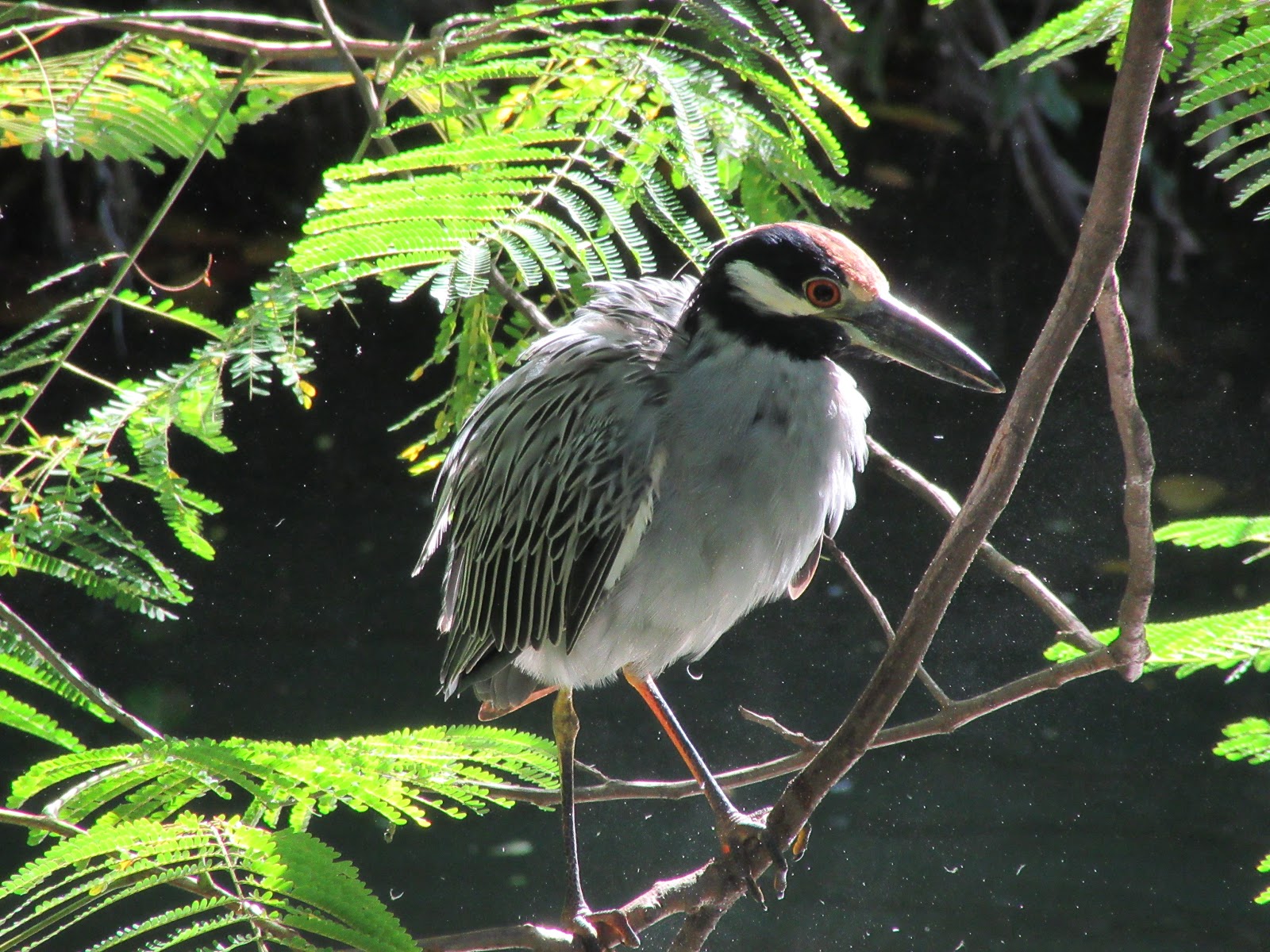
| Migratory and breeding waterbirds in the wetlands on the open and drier western part of the island. Students who are interested will be exposed to the wonders of birding on this course... |
 |
Landscapes: students study them at Samothraki! Here the Summer University livestock monitoring team in 2016 (http://sustainable-samothraki.net/project/livestock-monitoring/)
|
 |
The Fonias river near its springs on Mount Fengari (Saos). Here we will spend a night free-camping and working on various mountain issues. Samothraki has a dense network of streams such as this and the river corridors are a major focus of our work on the island (Photo from the Canyoning and Caving blog: http://canyoning-caving.blogspot.gr/p/samothrace.html).
|
 |
Wild mountain peaks: Samothraki has one of the most spectacular mountain wilderness areas in the Aegean islands. A wind farm with 39 huge turbines, new roads and all the rest is planned on Amoni at the center of this picture. The proposal has created a lot of controversy.
|
 |
| The Chora, Samothraki's capital and the cultural heartbeat of the island (Photo from the trekking walking people: http://www.topoguide.gr/mountains/thraki/hiking_on_samothraki.php). |
 |
| Kamariotissa, the port village and fishing harbour of Samothraki. Modern and traditional trawlers meet here. (Photo from a local paper: https://radiomax.gr/) |
 |
| One of the most amazing views in the Aegean islands: above Pachia Ammos beach. (Photo from great local e-magazine article in Greek: http://www.alexpolisonline.com/2016/07/samothraki.html?m=0). |
 |
| The wild south coast of Samothraki. Picture taken from the precipitous trail from Pachia Ammos to Vatos beach. |
 |
| The south coast of Samothraki, certainly on of Greece's most awe inspiring coasts, here trekkers descend down to Vatos Beach. (Photo from: https://agreekadventure.com/waterfall-kremastos-samothrace/#12/40.3955/25.5854) |
 |
| The role grazing plays in the landscape ecology of the island. (Photo from Samothraki Summer School brochure 2018). |