Sunday, December 10, 2023

Albania in late Autumn


Late November - Early December 2023

We spent a week carrying out river surveys between Berat and Korçë — the third and final expedition of this particular HCMR project in Albania. As always, we were in good hands. Met with generous hospitality, nice people, and interesting landscapes.

Although most of my time was spent coordinating and overseeing fish surveys along the rivers, I still managed to submit 11 checklists and record 36 species on eBird. This time, others handled most of the wet work.

I also enjoyed two memorable walks around Berat Castle and discovered a hidden trail descending below the flagstaff. The path zigzags across the cliffside, revealing interesting microhabitats, crumbling rocky cliffs and phrygana. The rocks had a family of Rock Nuthatch, Ravens sat nearby for a sec. Experiencing all this just before sunset time, under gloomy and humid skies, made it quite atmospheric — and absolutely worth it.


Chaffinch on Black Poplar by the Shkumbini River.

Lesser Spotted Woodpecker, by the Shkumbini River.

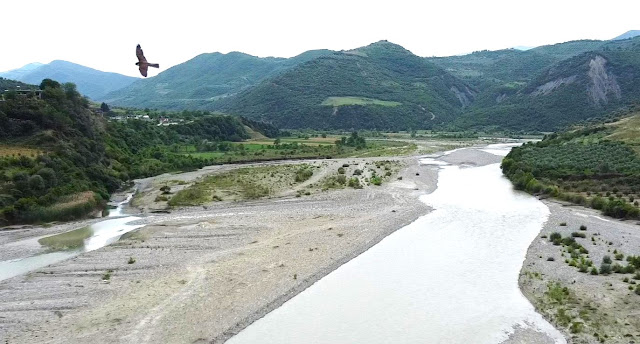
Osumi River, downstream of Berat.

Goritsa neighbourhood, Berat.

Eurasian Collared-Dove, Berat.

Black Redstart, Berat.

In Berat.

Parsimons! (or Kakis), juicy winter treat in Albania; Berat Castle.

Black Redstart, Berat Castle.

European Blackcap, Berat Castle.

Raven, Berat Castle.

These are some of the most interesting birds for me.

 
Despite working and overlooking fish surveys, I did manage to submit 11 checklists and log 36 species on eBird. Warmest thanks to eBird for providing this service (https://ebird.org/tripreport/176295)

Friday, December 1, 2023

Eco-Lodges of the World


What is an Ecolodge? What is 'close-to-nature' accommodation? 

Ecolodges usually strive to have rather strict requirments. Although not always met to the letter they should try to care for nature. All the requirements for lodgings to qualify as ecolodges are listed in the International Eco-Lodge Guidelines. According these Guidelines (1999), the lodging must have the following features:
  • Situated close to a natural area and in a rural or natural area that is not significantly impacted by pollution, traffic, noise, or urban development
  • Employ systems that safeguard the environment against pollution and degradation
  • Frequently employ energy-saving systems and, in some cases, renewable energy technologies
  • Employ or have access to nature interpretation guides who have received biological training or who have extensive local knowledge of the natural habitats
  • Inform guests and visitors about the local biology, offer books, posters, maps, photographs, orientation presentations, and other informational materials
  • Assist in educating guests, staff, and visitors about the importance and value of a healthy ecosystem, as well as describing how to enjoy the area without negatively impacting it
  • Benefit the local economy and demonstrate that ecotourism is a more sustainable way to earn money in the long run than destroying or modifying habitats for short-term gain.
Sometimes it is hard to define ecolodge, the "eco" aspect requires great care for the environment and the local community (i.e. can it be environmentally friendly to the core?). And yes, perhaps most ecolodges are rather exclusive and elitist projects. So, I will use a broader term here, that may not satisfy all above criteria; I present the idea of "Close-to-nature Accommodation" or CNA. 

CNA may differ from the Ecolodge because it may not be in a position to provide a more "eco" sustainability, thus it may not fulfill some of the criteria above. But it usually shares all the criteria, a good CNA nature lodge is an Ecolodge. A CNA (like an Ecolodge) is almost always located in a remote area or in an near a natural area, usually near or within an areas that has remarkalbe biodiversity attractions (nature). A key point is access to nature and wildlife watching of all forms; this is what ultimately defines a true CNA/nature lodge. The situation and circumstances are such to allow visitors to truly connect with the surrounding nature or to other biodiversity attractions; attraction of outstanding interest (near natural ecosystems, parks, trails) and often providing wildlife viewing opportunities. It may not provide facilities (nature trails, feeders etc) that most famous ecolodges have, but often it does. It may or may not be labled as eco-friendly or nature-oriented but often it is. Sometimes its just a good place to stay near exceptional wildllife and biodiversity attractions. It is not always upscale; sometimes its proprietors may not even be aware that the CNA is located near or within such an important biodiversity (or wildlife watching) attraction. So the CNA idea, is more fluid, it is similar but not identical to the Ecolodge concept. 

The CNA concept is broader than the Ecolodge concept. It may usually not be an upscale market establishement or specialized in any way. Emphasis on closeness and degree of quality of biodiversity attractions is paramount. We sincerely hope all CNAs can graduate to Ecolodge status. But first we would like to simply locate and evaluate some CNAs or Great Nature Lodges of the World. I will present some in upcomming posts. 


Wednesday, June 28, 2023

Central Albania in Early Summer 2023


Central Albania 

Early June, 2023

In the last few years I have been fortunate enought to have had several trips to Albania. I just came back from a resarch trip on the Osum and Devoll River σ(Seman Basin) - between Korce, Berat and Fieri during early June 2023. 

Some quick thoughts after hundreds of hours outdoors, assessing river and riparian zones and birding. 

The landscape vegetation is bouncing back after much abandonment during the last 25+ years. Grazing though seems to be totally abandoned in some places, not good...

Small traditional living villages do survive but they are small. 

Big mammals are comming back slowly. 

Raptors are scarce, perhaps poisons are being used. 

River riparian zone alteration and water pollution problems are severe in many places. Some vegetation come-back after abandonment in riparian zones is starting-up - especially during the last 20 years. 

More tourists are visiting Albania, Berat was nearly over-run by tourists during my stay in early June. I'll be back soon and will report on more. 

Photos and drone photos by me and Dimitris Zogaris.


Sunday, March 12, 2023

Fifteen Places to Go Birding Before You Die: In Greece...


Fifteen Places to Go Birding Before You Die: In Greece!

This is on a whim, so here goes!!
Greece is conviniently divided into north and south; two countries really, one is Balkan, the other Mediterranean. 

The list: 

North (N)

1. Evros Delta and surroundings. 2. Dadia National Park and along the river and surroundings. 3. Vistonis and surroundings including the Kompsatos Gorge. 4. Central Rhodope Mountains. 5. Kerkini and Belles Mountain forests. 6. Thermaikos Gulf Wetlands. 7. Lake Volvi. 8. Prespa. 9. Northern Pindos. 10. Kalamas Delta and Kalamas valley. 11. Corfu. 12 Amvrakikos. 13. Olympus and surroundings, including Tempe and Pinos Delta area. 14. Lake Karla. 15. Lesvos.

South (S)

1. Southern Amvrakikos, incl. Northern Lefkada. 2. Arakinthos, Lakes, Klisoura Gorge. 3. Messolonghi. 4. Strophilia-Kotychi. 5. Pylos. 6. Spercheios Delta. 7. Oiti. 8. Parnassus. 9. Lakes Yliki-Paralimni. 10. Schinias -Marathon Lake and surroundings. 11. Skyros. 12. Samos. 13. Rethymnon area. 14. Chania area. 15. Antikythira.

The background map is from eBird, 12.03.2023


Update (27.05.2025): Ebird's top ranking hotspots in Greece. Note that Kerkini wins three spots and the top spot at 305 sp. Only three spots are in southern Greece proper; two of these are in Attika (Schinias National Park, Spata Fields). As of 2024 Spata Fields is totally degraded with extensive in-filling etc and the sourrounding area is still under threat of a major river engineering project). 


Saturday, March 4, 2023

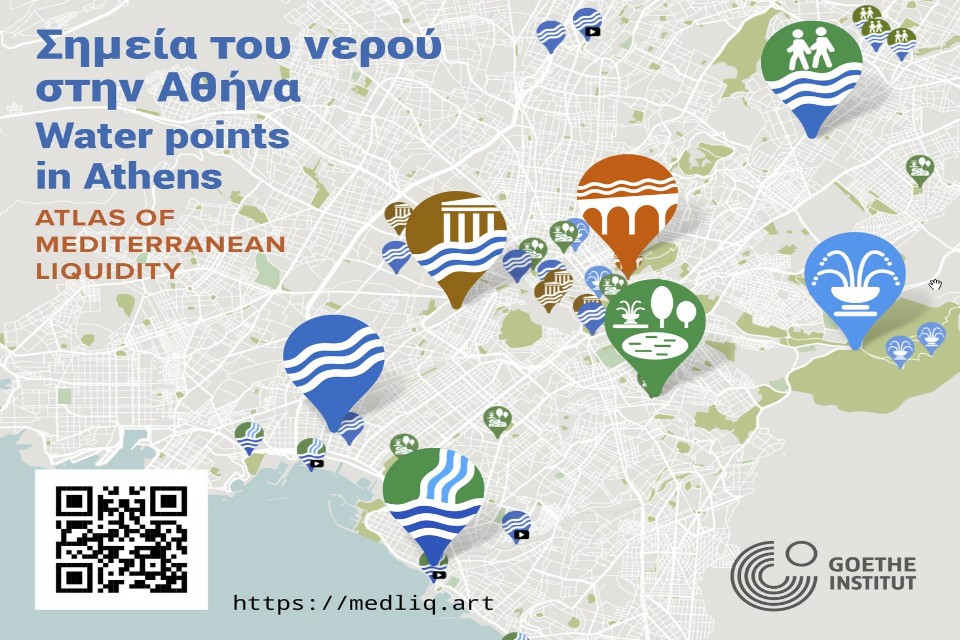
Exhibition: A walk-in map of water in the city of Athens (Goethe-Institut Athens)


ATLAS OF MEDITERRANEAN LIQUIDITY

Exhibition: 
A walk-in map of the points of water in Athens. 
Goethe-Institut Athens

Duration of exhibition: 6 April 2023

The Goethe-Instituts in the Mediterranean have joined forces to develop a series of digital maps on water as a valuable natural resource in the Mediterranean region.

In this context, artists and creators in collaboration with scientists undertook to design interactive maps through which a polyphonic collection of new perspectives and narratives about our relationship with the element of water emerges.

For the digital map concerning Greece, the local partners of the project - the collaborative-interdisciplinary design team Commonspace and the assistance of Stamatis Zogaris - a focus on the city of Athens. Nikos Providakis and other naturalists also helped with video work. Commonspace is a collaborative - interdisciplinary planning design group that has been operating since 2012. It provides services in the fields of Spatial Strategies, Architecture, Social Research, Urban and Environmental Design and Participatory Planning. It seeks to be a link between citizens, social institutions and public authorities, a hub for the exchange of knowledge, ideas and practices between citizens, experts and decision-makers.

Their research into urban space and the biodiversity of the city's scarce water elements come together at the Goethe-Institut Athen to create an installation that gives the capital's public access to a so far “unseen” map of water.

The exhibit is designed by the Athenian architect Eleni Spyridakis, the interactive map of Athens comes to life in the space of the Goethe-Institut Athen, where it is hosted. Furthermore, a reading corner in the institute is dedicated to the library's titles on water as a natural resource. The website and online maps are designed by nature interpretation expert Aris Vidalis.

Opening hours: Monday - Thursday 09:00 - 22:00, Friday 09:00 - 17:00, Saturday 09:00 - 14:00. Until the 6th of April 2023. Admission: Free

ΨΗΦΙΑΚΟΣ ΧΑΡΤΗΣ ΑΘΗΝΑ: https://atlas.akrino.com/
ΨΗΦΙΑΚΟΣ ΑΤΛΑΣ: https://medliq.art/

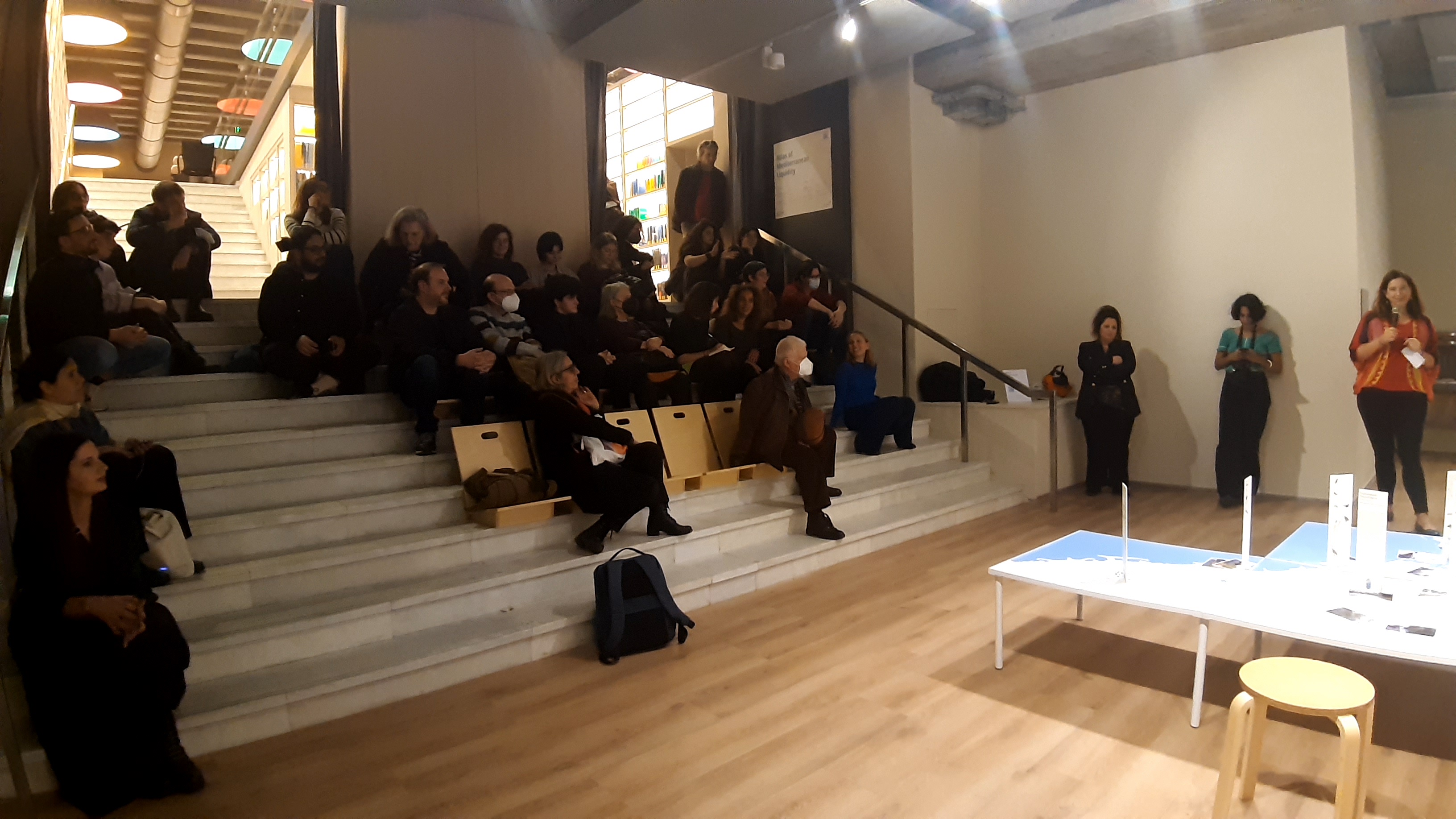
Photos below show the grand opening of the exhibition in the Library of the Goethe Institut in downtown Athens. Photos copyright © of Alexandra Masmanidi except for some I took as well; many thanks! 


While filming little snippets, I started talking to the smartphone camera and including commentary. This was really very easy with next-to-no preparation. I highly recommend it and it can be used to promote our work more (see some sellected film snippets in: https://atlas.akrino.com/)

Digital Versions
ΨΗΦΙΑΚΟΣ ΧΑΡΤΗΣ ΑΘΗΝΑ: https://atlas.akrino.com/
ΨΗΦΙΑΚΟΣ ΑΤΛΑΣ: https://medliq.art/