Friday, December 14, 2012

Sarajevo Nature

Mid December 2012

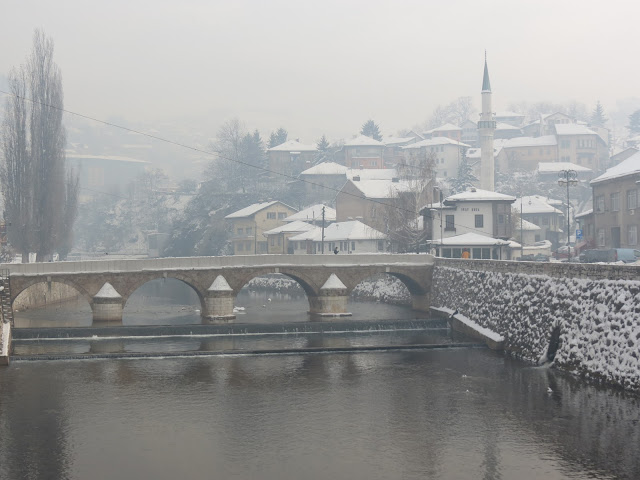
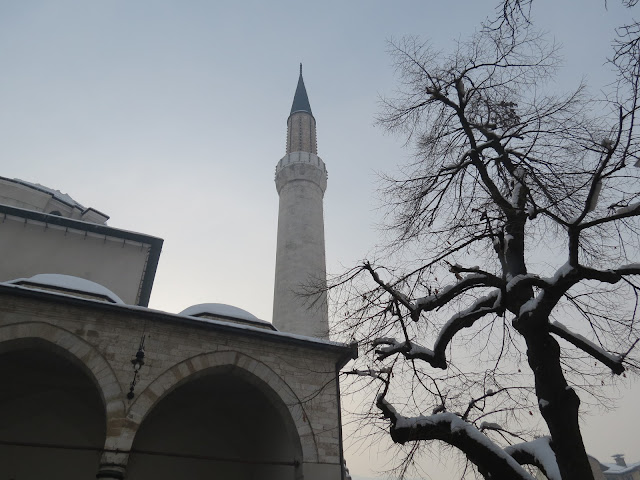
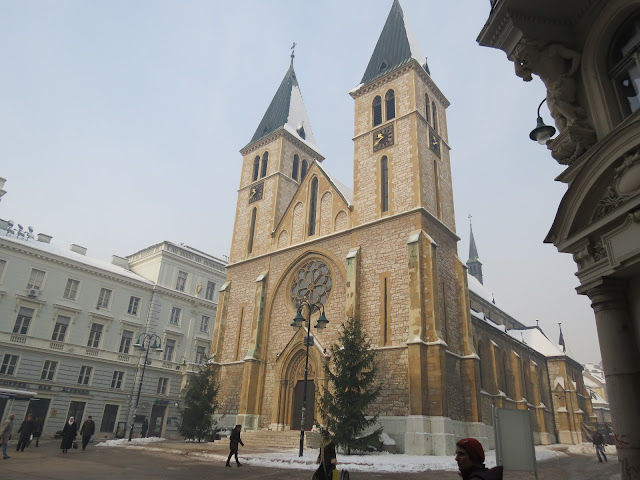
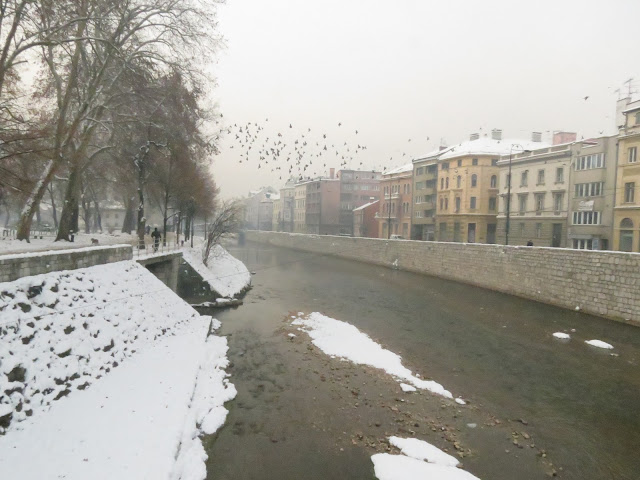
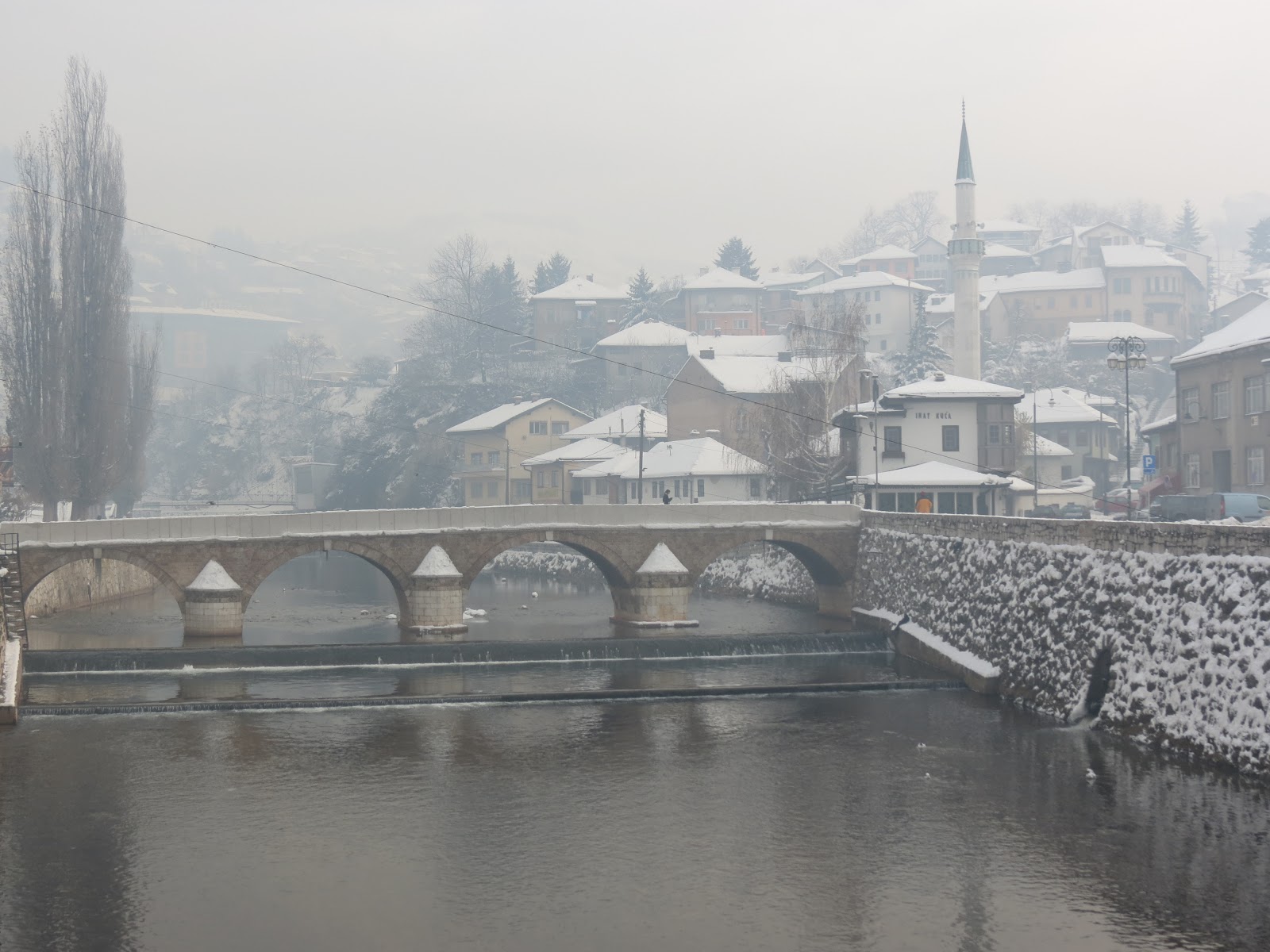
During our five-day stay at alpine Jahorina near Sarajevo we collected pictures of winter life. The mountain, with its posh hotels, high above the foggy valley of Sarajevo, was a paradise. On a break in our workshop, in the unique cold-crisp montane clarity I jogged away from everything. To Norway Spruce and silence. On the snowy road, dog footprints could have been wolf-prints. I loved the feeling of being excluded from civilization for an hour. 

The mountain contrasts with urban Sarajevo...A new capital city in "post-war" recovery. Here we were guided by our IUCN workshoper, Dejan Kulijer from the Natural History Department of the National Museum of Bosnia and Herzegovina. Dejan is a tall smiley Sarajevan, who knows the landscape in depth - and he has a real passion and knowledge-thirst for dragonflies...The museum where he works is unfortunately closed now, we hope they find a way to make it work again. The city needs its culture and nature.

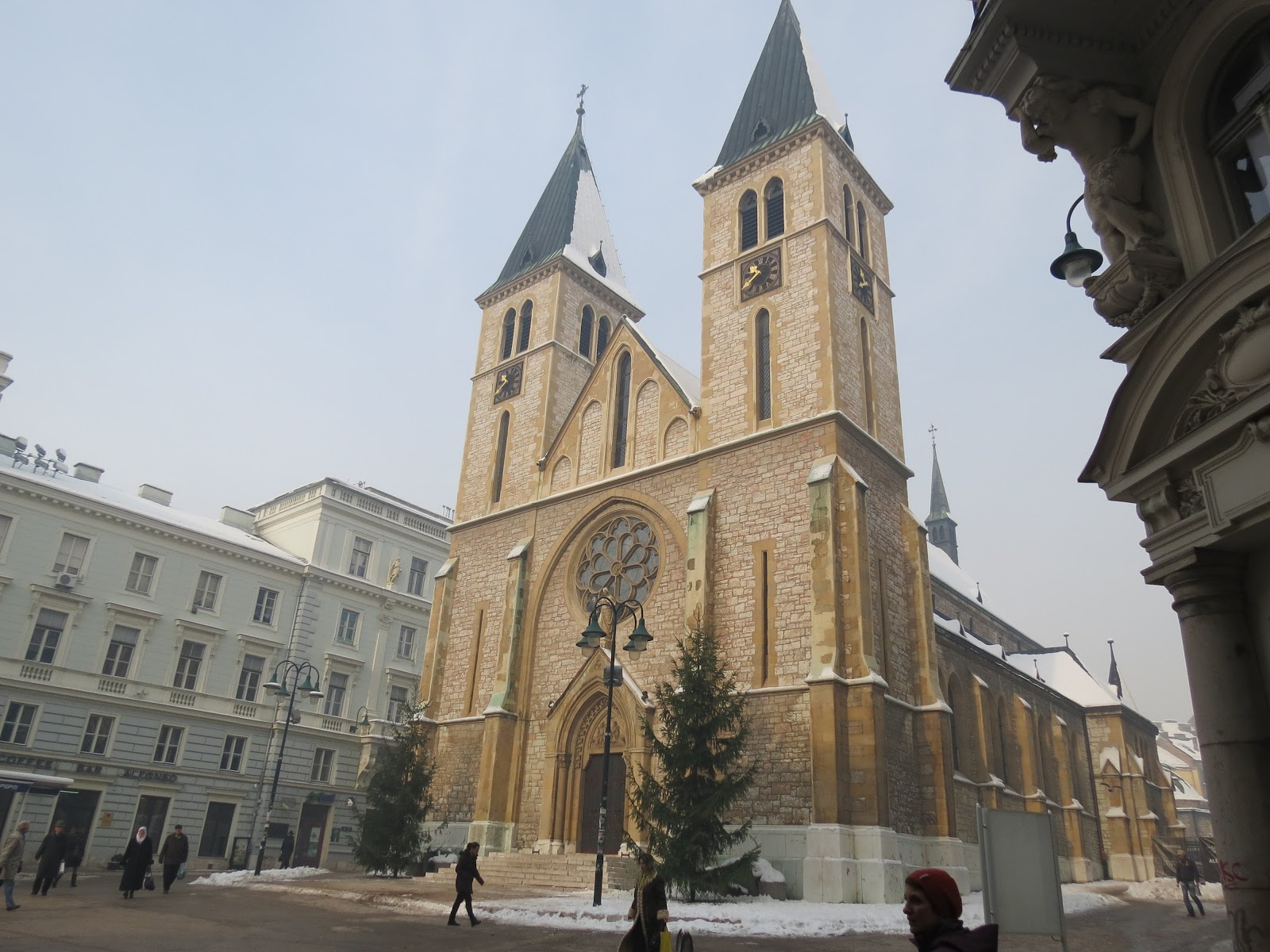
We saw a lot in a two hour walk and drive around. The churches - Islamic, Catholic, Orthodox. The touristy old town with many "Turkish" influences. The Latin Bridge over the river Miljacka (a distant tributary of the Bosna-Sava-Danube...). Hooded Crows, Eurasian Tree Sparrows, Jackdaws, pigeon flocks, ducks on the river - they bring life to the riparian scene. But most of all, people here are most intriguing; Islamic, Catholic, Orthodox. Bosnians and Herzegovinans, Balkan people. 

People have been through a lot here. Bullet holes and shell-damage in the buildings and the cemeteries in the city parks may shock you. This should be a good "wake-up call" for the wider region. As an inhabitant of the Balkans you stop and think. What happened here just a few years ago; horrific, unbelievable.

Never again!

Just visit Sarajevo.........


Thursday, December 13, 2012

Meeting: IUCN FW KBAs Sarajevo BIH

Mid December 2012

Sometimes conservation workshops are world class! 
This one was: IUCN Freshwater Key Biodiversity Areas Workshop for the "Mediterranean Balkans Hotspot". 

Anyone who knows a little about 'saving places', knows that the inventory and evaluation process is critically important, especially when opportunties arise. So are geographical boundaries- critical lines on maps. That is exactly what the IUCN Freshwater Biodiversity Unit is helping us do. Thanks to the organizers....Experts from Croatia, BIH, Germany, Spain, the UK and Greece met here, and we are helping to draw catchment site boundaries, correcting really messed-up GIS model hydrosheds, arguing about species' distributions, thinking about what to do next.... 

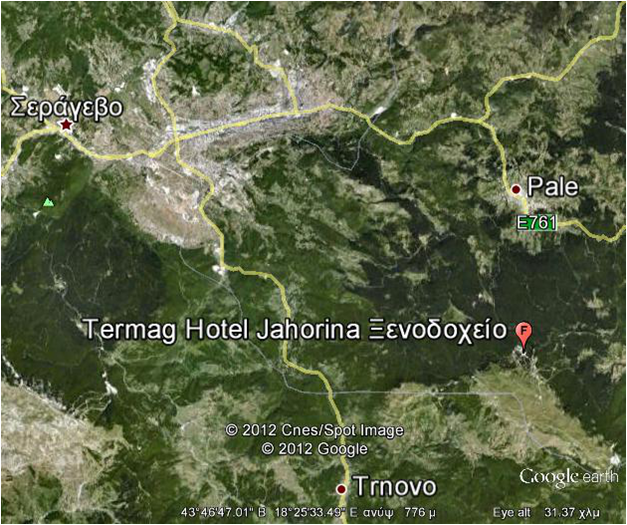
The meeting could not take place at a more distinctive locale. A place divided by political boundary lines drawn in blood by civil war. One of the worst chapters of modern European history took place here. This is Bosnia & Herzegovina near Sarajevo. In contrast to this recent past, the location is now a peaceful mountain resort.  Based at a wonderful hotel, near the Olympic Ski Area of Jahorina, in a wintry, totally snowed-in landscape. Pure white spruce forests with temperatures dipping down to -12 in the morning! 

I thank my Greek colleagues Panayiota Maragou and Yannis Bazos for taking some of the following pics.


Just to remember who was at this meeting:
Aljoša Duplić (State Institute for Nature Protection), Dejan Kulijer (National Museum of Bosnia and Herzegovina), Drazen Kotrosan (National Museum of Bosnia and Herzegovina), Geert De Knijf (Research Institute of Nature and Forest, INBO), Ioannis Bazos (University of Athens), Jörg Freyhof (iDiv), Krešimir Žganec (University of Zagreb), Marko Ćaleta (University of Zagreb), Panagiota Maragou (WWF Greece), Stamatis Zogaris (Hellenic Centre for Marine Research), Ulrich Eichelman (EuroNatur / River Watch Austria), Zoran Marčić (University of Zagreb), Zoran Mateljak (WWF Mediterranean Programme), William Darwall (IUCN), Savrina Carrizo (IUCN) and Violeta Barrios (IUCN). Many thanks to all of you! 

And here is the report that IUCN produced from this and other workshops in the Mediterranean:

 Darwall, W., Carrizo, S., Numa, C., Barrios, V., Freyhof, J. and Smith, K. (2014). Freshwater Key Biodiversity Areas in the Mediterranean Basin Hotspot: Informing species conservation and development planning in freshwater ecosystems. Cambridge, UK and Malaga, Spain: IUCN. x + 86pp.

Sunday, November 25, 2012

Book: Discovering Pikrodaphne


November 21st 2012

During a public meeting at the Agios Dimitrios City Hall - the Mayor presented us with a richly illustrated book on the Pikrodaphne Stream - a unique album full of wildlife 96 pages long, a hardcover monument to the stream.. 

Title: Discovering Pikrodaphne: A tour of the nature of Pikrodaphne Stream (in Greek).

The text is by well-known naturalist Martin Gaetlich - a man with a passion for urban wildlife issues and by the Municipality of Agios Dimitrios (The Mayor and her staff helped also). 

The work is edited by expert book-creator Nikos Petrou, president of the Hellenic Society for the Protection of Nature - http://www.eepf.gr/en/about

It was designed by Aris Vidalis with photographs by M. Agiazmatzi, A.Vidalis, M.Vlachou, Ch.Vlachos, M.Gaetlich, M.Kotsakis, Ch.Belias, N. Paterakas and N. Petrou. (Photos were given freely by the photographers for the cause). Unfortunately the book is not available in book-stores and one must probably have to talk to the Municipality to get a copy. Soon in will be out-of-print. Try to find a copy!

Mayor M. Androutsou talked fondly of the book during the  recent public meeting on Pikrodaphne Stream.  The cover of the book features an Olivaceous Warbler on an Oleander bush (Pikrodaphne= Oleander in Greek).

Martin Gaetlich, writer of Pikrodaphne, now living in Ireland. I first met Martin back in 1984 when he was one of the most passionate activists in the Hellenic Ornithological Society. We worked on several projects together. I hope he will continue to have a conservation presence in Greece.