Saturday, July 11, 2015

Symposium for European Freshwater Sciences_SEFS9 in Geneva


The brilliant waters of the Rhone at Ile Rousseau in the center of Geneva Switzerland.

July 10th 2015_SEFS9 Conference Geneva

In the midst of  political crisis in Greece I was in Switzerland at the Society for European Freshwater Sciences meeting (http://www.sefs9.ch/) in Geneva! Incongruous, but anyway it was well worth it.

The SEFs conferences are some of the best organized cutting-edge inland aquatic ecosystem meetings. They are bewildering, expensive and mind-expansive. We had 8 sessions concurrently so one had to run among sessions rooms held in the University of Geneva. I followed 51 such sessions in four days and participated in two 'technical meetings', one restoration field trip and a cruise: it was exhausting!

In the plane, flying back, I note some personal highlights of the conference and post snap-shots here. These are just first thoughts - I am sorry to have left out many acquaintances and others out of my commentary. This is an unfiltered subjective account of a very small part of this great conference...

  • The conference was a success - a whole-hearted attempt to integrate science, policy and conservation-relevant research in water sciences often in a holistic ecosystemic approach;
  • Wonderful work by the French in river ecology – I particularly enjoyed the work in typology and fish. And a wonderful talk by Benjamin Bergerot on the situation of Brown Trout in France (this was probably the most Hollywood-like talk I listened to – and really excellent interpretations!). Also it was great to catch up with my French Ichthyo-colleagues Nicholas Rochet, Anthonie Maire and to meet others also. Lots of cool French science in this conference!!
  • The focus-group on Temporary Rivers led by the enterprising, smooth-going and with a scientific flare Thibault Daltry!!! It was a real pleasure to meet Cliff Dahm from the US also. Great to listen to American student, Ross Vander Vorste on the hyporheic findings in France. Australia was well represented with such stars including Nick Bond and Cath Leigh (also interesting fish work shown by Mischa Turschwell). Wonderful to greet friends who study streams such as  Maria Sanchez-Montoya, Nuria Cid and Nuria Bonada who pulled of a mind-blowing Plenary Talk!
  • Great to see multiple-stresser stuff: I particularly like this kind of work.
  • Environmental DNA: my first exposure to it – well described by many good applications: nice to meet Phil who is working with Gordon Copp to ID alien fishes in lentic waters in England through this new method.
  • Excellent fish movements, barriers and river networks led by my good Portuguese friends Paulo Branco and colleagues. Great to see the graph theory at work and generally, wonderful work from Portugal from Teressa’s lab at ISA!! Nice to see the German science behind the lift-fish ladder application shown to us by Christian Huber. Also a very interesting talk on hydrology and temperature by Franck Cattaneo.
  • Wonderful to hear experts and wise men such as Leroy Poff who gave us a really great plenary on hydrologic alteration and river conservation in the 21st century. I really appreciate the effort this great thinker has made in this issue of global proportions (eco-flow relevant etc).
  • The work and conservation initiatives on “Small Waters” (a.k.a. small water bodies) led by the really clear-thinking sci-activist Jeremy Biggs (UK - http://www.freshwaterhabitats.org.uk/) and the very charming Mary Kelly-Quinn (from Dublin) and other great contributors such as local professor Beat Oertli
  • Nice to see people working on pond restoration in Britain (“Cheap & easy” restoration they called it- thanks Emily Alderton and others from UCL!). Interesting urban pond and stream initiatives. Very nice to discuss in-depth also with Paul Leonard on funding mechanisms and citizen science for "small urban waters". 
  • Wonderful urban waters science. For example the talk by Jon Harding (culverts stop Trichoptera movements…).
  • Also interesting approach on WFD river typology stuff – still an active area despite the 15+ years of WFD-relevant science. Wonderful to hear about the “rare river types” concept out of Ireland.
  • Lots and LOTs of climate change/ global change stuff. Wonderful to meet my Israeli friend Yaron Hershkovits (and discuss really exciting networking possibilities…) and also so many others doing SDMs and also fish (Good job by Lucie Kuczynski on stream fish in France…).
  • Great policy relevant work for conservation such as the specialized gap-analysis-plus by great young mind, Vergilio Hermoso. Many great Spanish minds at this conference!
  • Nice to learn some things about Lake Geneva (Lac Leman) birthplace of “Limnology”.
  •  The river restoration work done in the Rhone and its tributary (L'Aire), the and meeting the team of architects and scientists involved. Thanks to our guide Emily (Odonata and Amphibian expert) and the Architect Georges Descombes… (who hugged me to the point of great sensitivity when I revealed my "Greek" identity – thank you for the solidarity my friend...). Great to visit the Rhone riparian restoration area also. Please keep up the great work Swiss experts!
  • Also to meet some Turkish Colleagues, such as Meryem Beklioglu and others from the Balkans and one very nice Armenian too.
  • It was wonderful to meet Elizabeth Meyer again, and to dance and sing together: Greeks and Germans very united at this conference.... Three more Greeks were at the Conference (and my wife Vasso was accompanying me). It was great to hang round and to visit the canteena for cheapish fresh food at the Lake Geneva beach. If you are in Geneva you must not miss out on a summer swim and people-watching at this beach, the wonderful Bains des Paquis (http://www.bains-des-paquis.ch/Bains-d'ete/Buvette.html). 


So why do we go to these big conferences? One reason is to see the “state-of-the-art” and contribute a voice – an opinion- in the scientific community. To build an inland waters science culture that is sensitive and responsive to the broader needs. I for example talked about restoration experiences, shortcomings and prospects in Greece and Cyprus. It was like being a student again for me this kind of really professional conference. Thanks to the organizers, hope to see you in the Czech Republic at SEFS10.


Uni Mail venue, Univ. of Geneva.
Famous limnologists & ecologists doing their art.
Yaron Hershkovits. 
Vergilio Hermoso.
Paulo Branco.
Nuria Bonada.
One of our hosts: Beat Oertli. 
Thibault Daltry.
Leroy Poff.
With Gordon Copp.

Catherine Leigh.
Professor and restorationist, Zsolt Vecsernyes explanes the L'Aire restoration challanges at a session on-site.

The Architect of the restoration (renaturation): Georges Descombes.
Descombes' idea for letting the river form its own morphology, as "she" thinks and acts. (On the left you can see the canal which was once the river water body, now it is braiding through the re-naturalized channel. A novel approach.
At the Plaque de Chocolat section of the re-constructed river: after just two years it is now a more "naturalized" channel.

Restoration success after 15 years and about 70 million Swiss Francs at the L'Aire.
Artificial pit-excavated lake - renaturalized into a "ox-bow lake": Interpreted by the two local girls at centre.

With Paul Leonard at the very generous wine-tasting cave on the Restoration field excursion.
Vassiliki Vlami with our friend Elizabeth Meyer. 


At the Bains des Paquis - people dancing!
Iconic Lake Geneva. Lac Leman, birthplace of Limnologie. I read in wikipedia that the name of the lake: Lemannus comes from the Ancient Greek Limanos, Limènos Limne Λιμένος Λίμνη....meaning port's lake or lake. It is really a grand lake!


Saturday, June 20, 2015

National Museum Prague, Czech Republic

Τhe old building of the National Museum (now under renovation)

18-19 June: A night in Prague

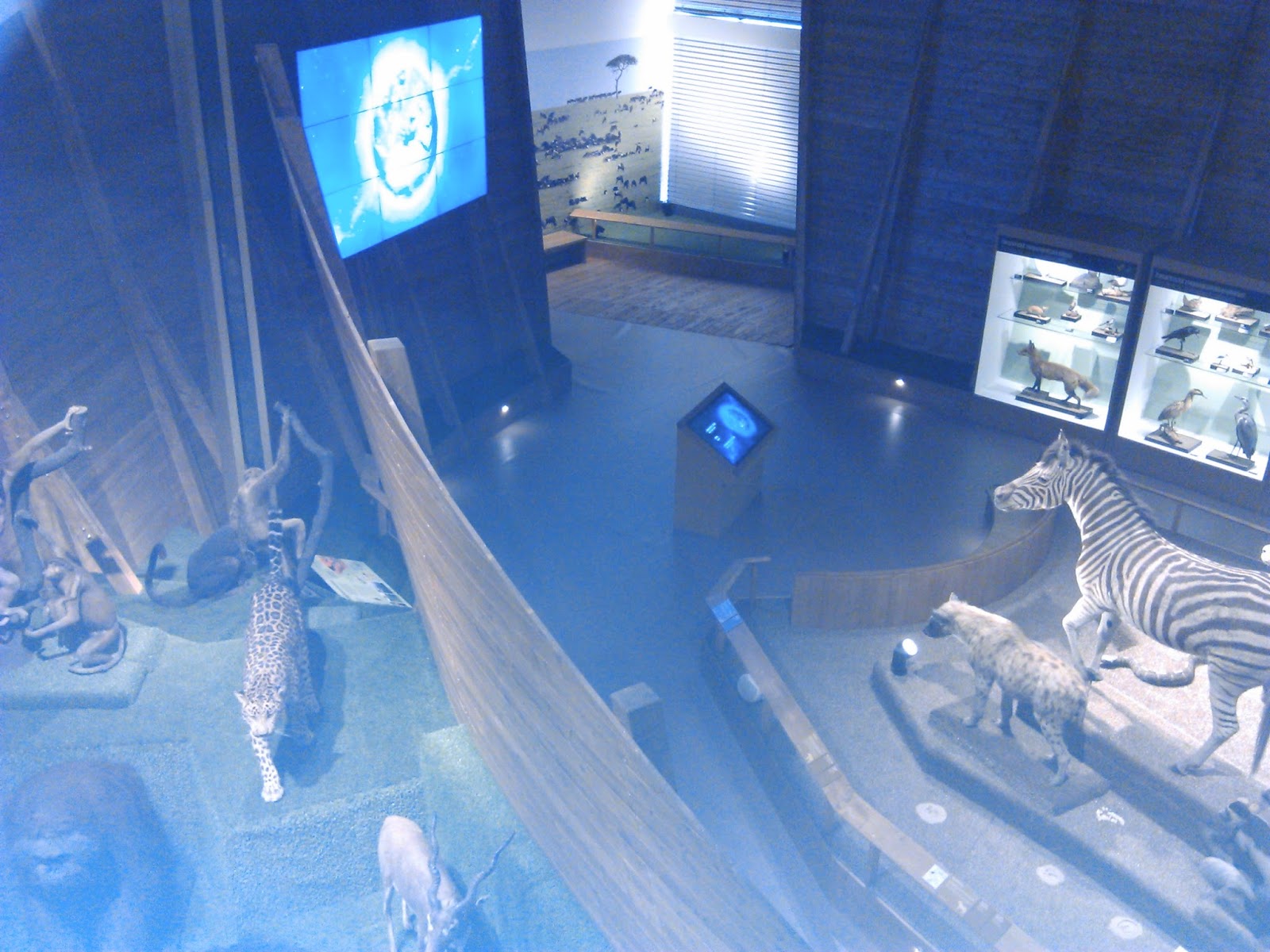
Had a good meeting at the National Museum in Prague. Below I post some mobile phone snap-shots of the new exhibit in the National Museum, "Noah's Ark", which is a fantastic natural history extravaganza (especially good for children and families). I also post some shots from our workings in the Ichthyological Department Lab, and my first-time glimpse of the city.

Anyone in this tourist honey-pot city should find and visit the Noah's Ark exhibit!
See: http://www.nm.cz/


Across the street the new building of the National Museum houses the Noah's Ark Exhibit.

NATIONAL MUSEUM - NOAH'S ARK EXHIBIT


AND BEHIND THE SCENES  - RESEARCH AT THE ICHTHYLOGICAL DEPARTMENT


OUR HOTEL NEAR THE MUSEUM'S RESEARCH DEPARTMENT REPOSITORIES


AND A TWO HOUR BRISK WALK THROUGH PRAGUE'S SITES


AND FROM OUR FLIGHT BACK WITH AIR SERBIA VIA BELGRADE...


Wednesday, June 17, 2015

Evrotas River Delta: Natura 2000 habitat mapping


Vivari Lagoon area, Evrotas Delta, South Peloponnese (Photo: D. Koutsogiannopoulos).
Evrotas Delta

Was down in the Delta plain of the Evrotas river, one of the southernmost river valleys on the European continent and a Natura 2000 site.

We aimed to monitor and map habitat types, as per the demands and application of the Habitats Directive in this country - so it was a fascinating learning experience. Especially so since I am involved in monitoring fishes also.

The whole concept of a habitat type, a phytosociological unit is fascinating to me. Its tough stuff if you are not habitually involved in this - as a professional. So most people don't follow. Of course any taxonomy wakes you up: you try to see the different nuances, the patterns.

We monitored 11 habitat types; I'm just placing my "thought-rush" here for open safe-keeping.

Some important discoveries...

State of wetlands: Basically over 70% of the delta wetlands have been drained. What remains is heavily modified due to the exhaustive water stress from agriculture. The most amazing wetlands in the area area the 'clear-water lotic waters' of the Evrotas and Vassilopotamos and the huge water meadows of the Asteri Marsh which practically drains in to Vivari Lagoon. Generally the area is so filled-up with orange orchards it could be anywhere in Florida (if you could hide the looming mass of the wonderful Peloponnesian mountains).

Habitats:
The most interesting habitats are not very well described on included in this Natura 2000 site. Water habitats - spring water habitats are fascinating here but again most in modified (channelized state). The dunes are good, but again a thin sliver behind the beach. At one area near Asteri Marsh the dune-dry grassland goes well beyond the beach inland and this is interesting. There are no saltmarshes.

Fish:
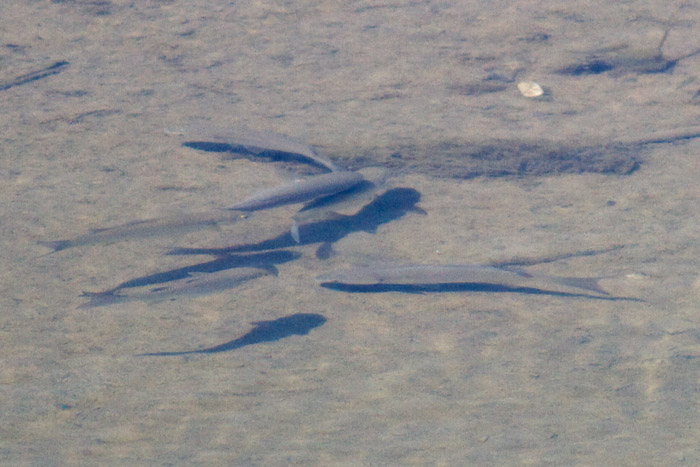
a. Mugil cephalus and other Mugilids (Chelon sp.) were found 7.3 Km from the sea at the boundary of the Natura site.
b. Mugilids were found in the middle of the Asteri Marsh (along with dozens of Gambusia)
c. Gambusia are in very high numbers in the Asteri Marsh Canal (near Asteri village) and in the Vivari Lagoon (along with Mugilids in the lagoon).
d. We spotted to largish Sea Basses just upstream of the lowermost bridge of the Evrotas in waters that were full of Spartian Minnow-Roach. Fish were easily spotted and enjoyed through the use of binoculars. The waters gin-clear and very conducive to fish-watching.

Birds and other wildlife:

We were not birding, but the birdlife was disappointing. Few species breed compared to what one would expect in an area with so much water and rather varied landscape (well very dense agricultural landscape). Since orange and olive is expanding this may not have been the state 20 years ago. I feel there are very important special habitats missing and the orange plantations have heavily affected bird communities.

The following nesting species are important: Blackcap warbler (riparian woods etc of the Evrotas), Little Bittern (Vivari reeds), various other water birds (Reed warbler). Generally there were very few larger birds. Bee-eaters maintain a small colony. Raptors are few and far between (only Kestral and Buzzard).

In walking about 3 Km of beach area (the entire Nature site's beach is 13 Km long) we found only one crawl of a sea turtle. We found two dead Loggerhead Turtles. We found a very small turtle dead that we suspect may be a Green.

We spotted Beach Marten on two occasion both inside sizable towns.

In many areas frogs, terrapins, etc were evident. A single snake was seen near Vivari; one Glass lizard was seen dead on road. Typical herps include the beautiful Balkan Green Lizard.

Some of the snapshots and photos we took are posted here; soon you can read more at:
http://www.naturagraeca.com/

Also if you want to read (in Greek) some of our ecotourism writings about the Evrotas Valley see:
Evrotas_Valley_River_of_the_South_zogaris & vlami

Acknowledgements
I want to thank expert naturalist and co-traveler Dimitris Koutsogiannopoulos for all help in the field and of course for sharing his amazing photos with me (some posted here). Also, the Oasis Hotel at Skala for treating us nice.


A colourful scene at the Asteri Marsh.
Vivari Dunes and the 'old river channel' at the eastern side of the Delta.
Bush cricket on dunes.(Photo: D. Koutsogiannopoulos).
At the river mouth of Vassilopotamos.(Photo: D. Koutsogiannopoulos).

Little Grebes breed at Vivari.(Photo: D. Koutsogiannopoulos).
About 5 km before the river mouth. (Photo: D. Koutsogiannopoulos).

Damselfly. (Photo: D. Koutsogiannopoulos).

Darter. (Photo: D. Koutsogiannopoulos).

Mugil cephalus 7.3 Km upstream from river mouth, with Gambusia and Tropidophoxinellus(Photo: D. Koutsogiannopoulos).
Mosquitofish Gambusia holbrooki. (Photo: D. Koutsogiannopoulos).

Mugilids, up river; at 7.3 Km upstream - at least 200 seen here with Squalius, Tropidophoxinellus. Gambusia.(Photo: D. Koutsogiannopoulos).
Chelon sp. in the middle of the Asteri Wetland (in artificial ponds) with Gambusia(Photo: D. Koutsogiannopoulos).

Little Egret, Evrotas main stem.(Photo: D. Koutsogiannopoulos).
The river at the Natura 2000 boundary 7.3 Km upstream of the river-mouth.

Protocol in the field. (Photo: D. Koutsogiannopoulos).
Striped Terrapin. (Photo: D. Koutsogiannopoulos).
Main stem of Evrotas "second bridge". (Photo: D. Koutsogiannopoulos).
Wet grasslands. (Photo: D. Koutsogiannopoulos).
In the savanna. (Photo: D. Koutsogiannopoulos).

Balkan Green Lizards flirting!. In the grasslands behind the dunes near Asteri Marsh. (Photo: D. Koutsogiannopoulos).
Common buzzard along the river bluffs near Skala. (Photo: D. Koutsogiannopoulos).

In the Phrygana above Skala. (Photo: D. Koutsogiannopoulos).
In the Phrygana. (Photo: D. Koutsogiannopoulos).
In the 'grey dune' grasslands near Asteri Marsh (Photo: D. Koutsogiannopoulos).

In the Asteri Marsh. (Photo: D. Koutsogiannopoulos).
Wild garlic. (Photo: D. Koutsogiannopoulos).
In the east side of the Delta. (Photo: D. Koutsogiannopoulos).
An amazingly wet year at Europe's southernmost continental river!
The willow woods seem to be regenerating well in the channelized river. If only the embankments had been set back 50 m. more...
The Evrotas old river channel or distributary, about 1.5 km east of today's canalized river-mouth.
Grey dune habitats, these are stabilized dunes with grassland plant associations about 400 inland of the sea near Asteri Marsh.
This is a recently dead Sea Turtle; this was much much smaller than the other two we found along the beach. This one was at Vivari, can anyone please help ID it?
Seems the above turtle is a young Green Turtle. They overwinter in the Laconikos Gulf. 

Unimaginative but true: river engineering attempts at Skala Springs. I would love to help do some cheaper yet more important "biodiversity restoration approaches". Where are the naturalists? 
The brilliantly clear spring waters of the Vassilopotamos many kms downstream of the Skala Springs (and about 800 m from its river mouth).

The Evrotas at Skala Bridge. River of the south my friends!
The Natura site as it is today. The coastal strip is about 13 km long and the Natura 2000 site includes about 7.2 Km of the Evrotas river's canalized main-stem. Our recommendation is to extend the protected area upstream to include Vrondamas Gorge at least. Also I am interested in how to manage the expanding orange orchard plantations which I now consider a "plague" for the site. These cash-crop plantations are of absolutely NO biodiversity value and they will keep extracting waters and this will continue to have an over-riding water stress pressure on the landscape and the protected area. Many challenges ahead!