Thursday, March 7, 2013

Summer-time Ichthyology on Cyprus


Spring 2013

Well in winter you re-collect yourself; you think about summer. As Ichthyologists we work mostly during the summer, collecting. I'm posting some of last summer's photos from work we did in Cyprus- summertime memories. I hope these fuel our designs and aspirations for this year. The work in Cyprus was pioneering - exploratory, really enjoyable. One of my personal highlights was a fortnight spent with my good friend Vassilis Hatzirvassanis in July 2012. Most of the pics that follow are his (except for the underwater ones). Vassilis and I were hosted by the Department of Forests, based at Platania Kakopeteria Forest facility and working on an HCMR project for the Cyprus Water Development Department. We decided we would prolong our stay, and give more effort, by doing everything low-budget. So I cooked at night and we ate al fresco camping-style anywhere (including by the Pediaios in the middle of Lefkosia). We even made our own coffee most days; I learnt so much from Vassilis' discipline. During the work we employed no less than half a dozen volunteers who would meet up with us and help in the sampling - which incidently took place throughout the island. The volunteers included Elli Tzirkali (who also hosted us in her research room at Platania), Haris Nikolaou and friends from the Forests Department, Gerald Dorflinger from the WDD, Athena and Lefkios from Terra Cypria. It was a great time for me. Budget Rent-a-Car gave me a great deal on a leased jeep: 33 Euros per day!!! Smith-Root let me borrow a new electrofisher (which I later found cash to buy). I felt so good about this trip - and I am still so thankful for it. I lost 2.5 kilos working all day for two weeks - despite the obvious muscle build-up. I felt totally revived. Life is beautiful - oftentimes for those who love nature...


The largest Brown Trout ever caught using electricity in Cyprus, at an undisclosed tributary on the western side of the Island.

Big BIG Brown Trout in Crystal clear summer waters. They were introduced 70 years ago; and still survive. There are nearly 200 kms of perrenial running cool mountain waters in the Troodos of Cyprus. Its surprising there are no native salmonids there.
The Maroulena Stream: A unique volcanic canyon near Lefkosia with cool water feeding bedrock pools -even when the temperature soared at 44 C in mid July. This spot is famous for its Snakes (an endemic subspecies of Grass Snake found only in three spots on the island). Did'nt see any.

Fishing in the Maroulena with members of the Forests Department. On that hot day I discovered Mahalebe - a delicacy at a road-side stall - the best dessert you can have after a swetty time lugging 15 kilos on your back.
Gerald from the WDD in the lower reaches of the Diarizos near the small T/Cypriot village of Siskyou - no fish in the stream but hundreds of thousands of tadpoles. 
This eel we found upstream of the Arminou Dam - we did'nt expect it but many people instisted they exist. How do they by-pass the dam?

My good friend Elli who is doing her PhD on Butterflies, Grasshoppers, Plants and Climate change on Cyprus - Good Luck Elli!!! (Here we are at the beautiful Xeros river in Pafos). The trees are Oriental Alders!!!
Having lunch al fresco near the Green Line on the Pediaios River with my friend Vassilis. Now I am not a good cook and Vassilis is not exaclty picky about food options. It was great!
A true-blue Rainbow at the Kalidonia stream near Platres. Underwater photo in-situ - th e water was freezing even in the Summer at 1500 m. asl.
One of the firest Brown Trout I ever caught and photographed wild in the water at the Upper Diarizos (Platys Tributary). What a beautiful fish...
Swarming school of Rainbows at the hatchery pools of Kalopanayotis. The Dept of Fishereis and Marine Research were always so kind and hospitable to us - thank you!!!
Photo of Roach inthe lower Diarizos - taken while snorkling - great to watch them. I was looking for River Blennies here but never found them.
James MacClaine from the British Museaum finally found the River Blennies for me - in the Museum collection -this specimen was deposited from Cyprus in 1909. We think it may be extinct on the island now. It was a great discover to find the specimens, thanks James!


Saturday, March 2, 2013

Campaign: Fishes of Oroklini Lake, Cyprus


March 1st 2013 

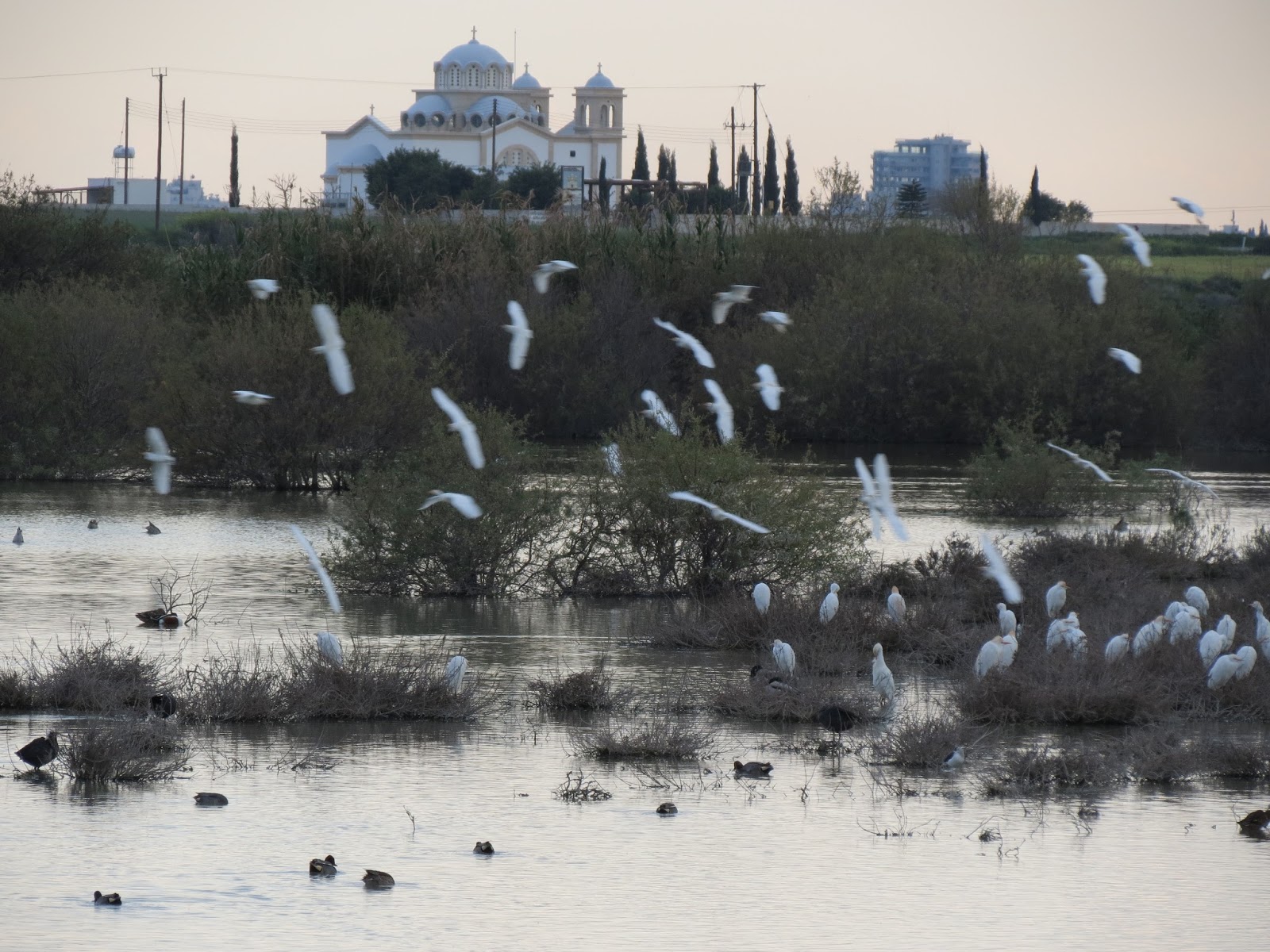
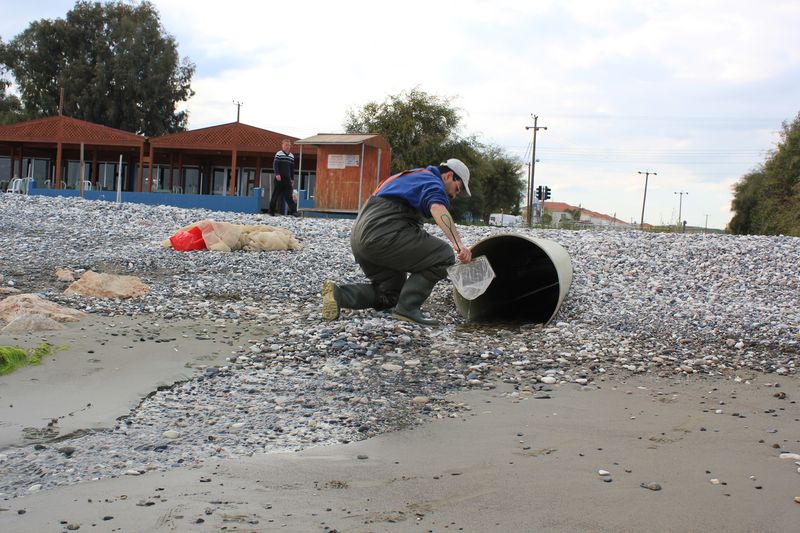
With Cypriot friends Athena and Iakovos and guided by Melpo Apostolidou from BirdLife Cyprus we explored Oroklini Lake. It is a soon-to-be famous wetland area located near Larnaka. This was our first ever wet-season ichthyological sampling here using a fry-net seine (everybody should have a fry-net with them anywhere they go...). Water levels were surprisingly high and the water that entered the lake from the upstream riverlet smelled rather bad. However the first site we sampled (near "The Sluice") is full of invert life - but no fish. The lake has a huge population of Gambusia Mosquito Fish but they are probably widely dispersed all around at this time (densities are low at high-water levels during winter here). Near the main "East Canal" outflow by the beach we tried in vain to catch elvers (young eels) - no luck. We did spot some rather large grey-mullets (but we need a fish-trap to catch those...). We did catch Mosquito Fish here and then again more at the second canal ("West Canal"). No eels this time; but, the birding was fantastic. It was a great afternoon out. 

For more info on the restoration and conservation work being done at Oroklini please see: http://www.orokliniproject.org

Melpo Apostolidou works at one of the most important NGOs for nature conservation on Cyprus BirdLife Cyprus - a group all Cyprus-lovers should support! Have a look at their new site: http://www.birdlifecyprus.org/en

Eurasian Teal (Sarseli)

Spanish Sparrow (Arkostrouthos)
The Lake from the upland behind.

Melpo at The Sluice.

Water levels very high near sluice.
Near fist sampling site adjacent to the sluice.
 Dragging the net carefully (ph. Melpo A.).
Despite repeated nettings - not a single fish (ph. Melpo A.)..
Black-winged Stilts (Kalamokanas)
Stream entrance to the lake.
Walking back to the jeep.
East Canal, the main drainage canal on the beach.
East Canal, flow to the sea.

Elvers sometimes hide in culverts (photo: Melpo A.).
East Canal flow to the sea - there is flow this year.
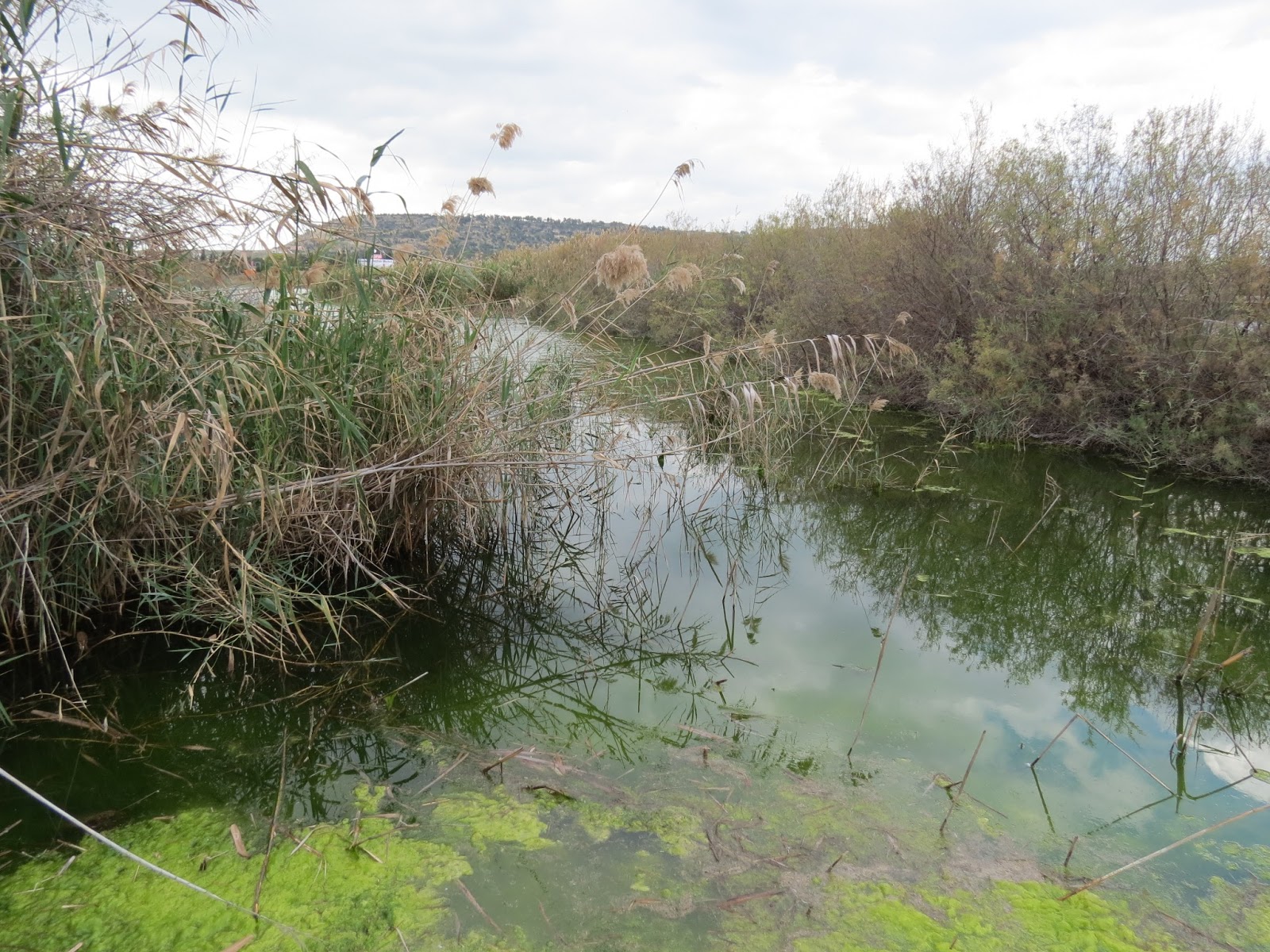
Stream entering the Lake near highway; water smelly.
West Canal river mouth with flow to sea.

 Fry-netting in the West Canal (ph. Melpo A.).
No life- could someone have poisoned the water? 
West Canal with reedbed - great Eel habitat.
Iakovos searching at The Sluice.
Athena and Melpo at West Canal - very dirty water... 
Walking to the first sampling site.
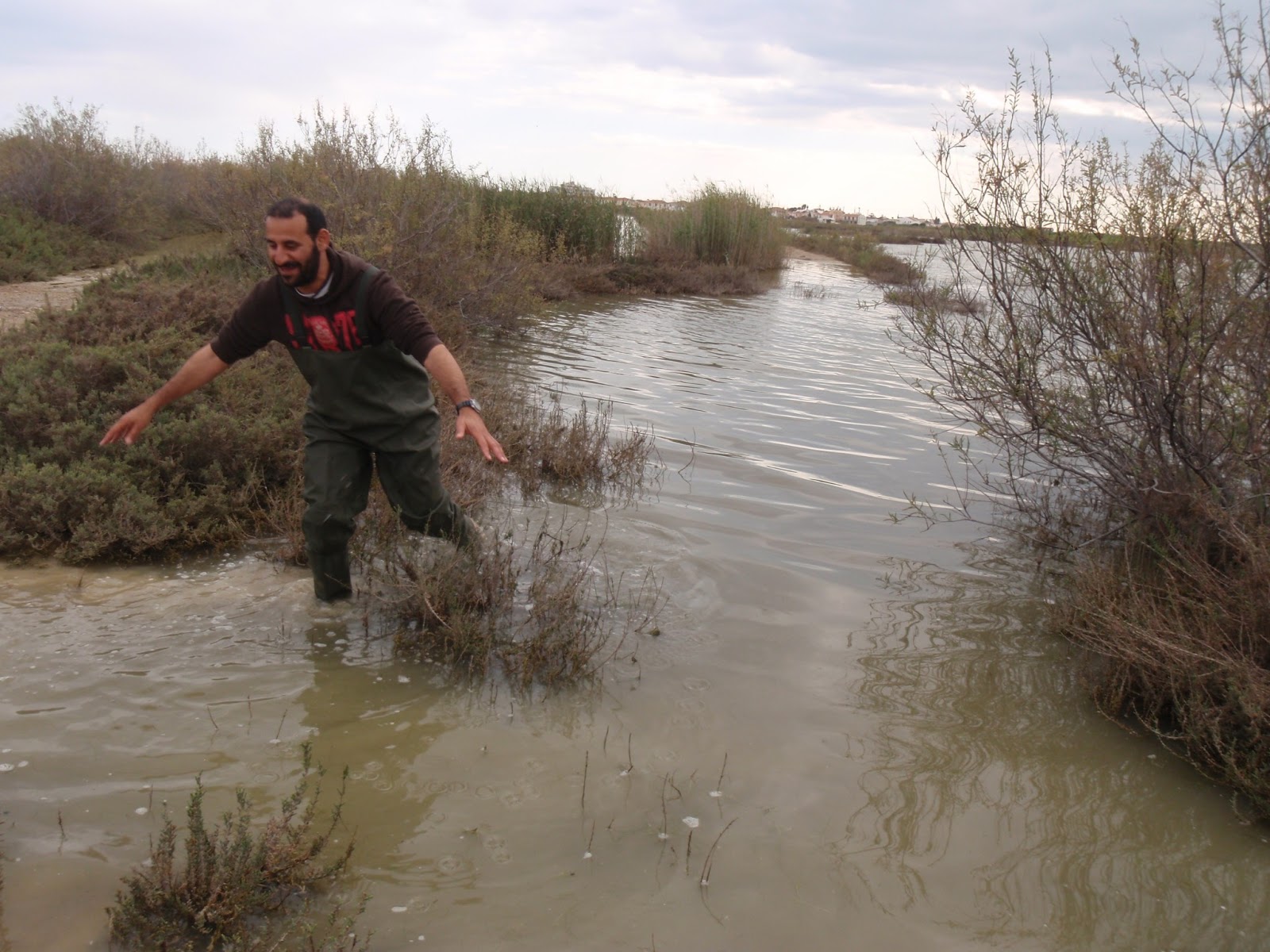
Chest-waders are not enough!
Iakovos balancing on slippery mud.
Searching the fry-net for tiny-tiny fishes.
West Canal, inland of coast road.
Iakovos spotted some really large grey-mullets.

Mosquito Fish - two males.


 West Canal Fry-netting (Ph. Melpo A.).
The water was much deeper than in July 2012 when we last did this.
Searching the fry-net at West Canal.
Washing the net in the sea at the end of the day (ph. Melpo A.).
Thanks team! 


Campaign: Paralimni Lake, Amochostos Cyprus


March 1st 2013

Paralimni Lake in Southeast Cyprus. A truly unique wetland area that I first visited in 2009. It was then totally dry - and had been nearly totally dry for many years. I could not imagine it in anyway being a flooded "lake". In fact, I learned reading a book on Paralimni - that many older maps never showed this huge ephemeral wetland at all - and that's surprising (perhaps it was always a nearly ephemeral vernal-like waterbody - really unique....). This year the "Lake" is full of shallow water and full of life. Biologist Athena Papatheodoulou of Terra Cypria and Biodiversity East and our friend Iakovos Tziortzis of Enalia Physis who lives near Paralimni guided me to this spring wonderland. 

Today Lake Paralimni looked to me like one gigantic Mediterranean Temporary Pond! We found several hundred dead Tadpole Shrimp, the famous living-fossil  (looks like Triops cancriformis). I don't know any reference to this scarce species on Cyprus - so its seemed like a great discovery for us! This is the first time I see Triops - these amazing crustaceans look like horseshoe crabs or trilobites - they are out-of-this-world!!! The specimens we found were huge: more than seven centimeters from head-tip to tail-tip!!!

 Paralimni Lake is one of Cyprus' most threatened wetlands and some locals are eager to help stop its degradation. One of the major causes of  the people-wetland conflict here are the mosquitoes. People have a long-time phobia of the mosquitoes and the city of Paralimni and the surrounding villages are all built right on the lake's shores. Unfortunately it is not just the lake that produces all the mosquitoes - thousands of tons of garbage and construction-site debris litter the lake shore and here in the tiny water-spots Anopheles and other bloodsuckers breed freely! In the lake, the mosquito fish, dragonflies, amphibians and birds are part of the rich food-web that keeps insect populations under control. So the key is to manage the wetland, clean-up the mess on the lake's outskirts and inform the public. If the public respects and identifies with the wetland it may be protected. Locals should know that during some 'wet-years' mosquitoes will be a real nuisance. Spring 2013 is a wet year at Paralimni! Since malaria is long-gone - people should not worry so much. However, a mosquito management plan must take wetland biodiversity conservation into consideration. And the Lake's biodiveristy and its serene beauty are worth all the fuss!!!

Environmentalism on Cyprus could become much much stronger if we unite and organize smart proposals and campaigns that bring together research, policy, development, recreation and education. Good local scientists are key-players in this super-integration for conservation. For example, our friend Iakovos Tziortzis belongs the the NGO ENALIA PHYSIS - have a look: http://enaliaphysis.org.cy.  Athena Papaethodoulou works for years now at another good Cypriot NGO Terra Cypria - have a look: http://www.conservation.org.cy/. Keep-up nature-centered environmentalism on Cyprus!