Monday, May 6, 2024

Ichthyology of hydroelectric dams: Ilarion and Polyphitos in Northern Greece


Ilarion and Polyphitos Dam Lakes, Western Macedonia
Mid-term report, April 2024 

Since Novemer 2022, HCMR and our colleagues at the Department of Ichthyology and Aquatic Environment (DIAE) of the University of Thessaly, and other collaborators have been working on ichthyological research related to mitigating the impacts to fish by the Ilarion Hydroelectric Dam, on the Aliakmon river, in Western Macedonia. Along with expert help from researchers in Austria, Slovenia, Britain and the National Technical University of Athens we have slowly built a knowledge base to confront this complex issue and associated problems of broadscale fragmentation and change by the Ilarion high dam. Our background exploratory baseline surveys for the Public Power Corporation (DEH) in a project in 2007 to 2009 (before the dam was built) provide important references. This current project is deep dive (2022 to 2025), a proposal for specific restoration measures, with possible further work and monitoring. 

Now we are at an exciting mid-term point in the present study. 

We have designed the sampling schedule and executed the first phase of the inventories, doing all forms of fish sampling: boat-based electrofishing, fisher interviews and eDNA sampling. We have organized and are designing mitigation measures (habitat enhancement, species management, fish-pass in tributary streams, adaptive management of habitat alterations). And we are organizing the monitoring plan for the future.

These are some important first discoveries that should inform future conservation planning and much-needed actions:

-Our philosophy for large hydroelectric reservoir management promotes a "pro-nature" approach and must include biodiversity conservation actions within a "best-possible" adaptive management framework. High dams may somewhat appear like so-called "novel lake ecosystems" but we actually have no right in "labelling" them as something so different or "alien". It may help to distinguish them as "special" in their own right but they are evolving features of the wider landscape. Each reservoir and its local situation is unique; some reservoirs can be important refuges for biodiversity. In the case of the Polyphitos and Ilarion dam lakes, we see really big aquatic and riparian areas that definately host a lot of fish and wildlife. But, of course, there are problems; for example:

-The new dam of Ilarion (2013) is a complete block to upstream fish migration and has seriously impacted at least five rheophilic river fishes; some of these species have been lost above and below the dam for many kilometers of their former range.

-Water levels and water flow management are anthropocentric. Part of the water is destined for potable water for Thessaloniki, flows are adjusted in response to electricity use. Electricity use is also influenced by the spread of renewable energey sources (wind and solar farms that have recently proliferated in the region). Flow and surface water depth regimes are not steady or "predictable". Each year depending on precipitation and consumption patterns, water level regimes may change. This unpredictable extreme fluctuation is not good for nature. 

-Flow quanitites and water quality as well as hydropeaking is a problem downstream of the Ilario Dam. Rheophilic fishes have been effected as have limnological parameters in the older reservoir downstream, Lake Polyphitos. 

-Since there is no monitoring data beyond the initial work of 2007 and 2008; the knowledge of the evolution of the lake ecosystems after the new Ilarion Dam begun functioning (2013) is unfortunately scant. There are certainly many other complications. 

-People translocate fish and crayfish in new water bodies without any guidance from authorities, scientific planning or enforcement. 

Some relevant management approaches:

-No fish pass can possibly overcome a 130 high dam and there is no feasibility reasoning to promote this in the case of Ilarion Dam. In its place there was a deep gorge before the dam and this long white-water section did create some sort of a barrier for the passage and establishement of lentic species upstream of Polyphitos lake (i.e. roach, bleak where totally absent upstream of the location of Ilarion Dam before the dam was created). 

-Mitigation and management opportunities abound in the two lakes and the part downstream of the Dam. The fish of both lakes do have their share of pressures/impacts to deal with. Various changes and human pressures; its not just the effects of daming (fragmentation) and impounding (obliteration of riverine/lotic habitats).   

-No artificial hatchery system is required to enhance or augment fish populations in the new reservoir (Lake Ilarion, formed in 2013); fish communities are already being established.

-In Greece, we prefer to call dam reservoirs artificial lakes (τεχνητές λίμνες) not reservoirs (ταμιευτήρες). I believe this is a productive management approach since they are very similar to true lake ecosystems, of course they do have fundamental differences. If they are managed with nature in mind, they could definately provide important habitat for biodiversity and ecosystem services for local communities. 

I'll try to inform in another post on our scientific research and management approaches. I post some snapshots from the field and lab and will post more in the near future.

MAPS OF THE STUDY AREA

The study area (focus area in yellow square) on the Aliakmon River, within the Administrative Region of Western Macedonia (pink dotted outline). 

The position of the Ilarion Dam (completed and functional in 2013), its new lake reservoir (Ilarion Lake- in red) and the downstream section of the river with the much older Polyphytos Lake which is also a dam reservoir on the Aliakmon (constructed in 1972). The study area is divided in different water bodies: 1. Upper Aliakmon, 2. Venetikos Tributary, 3. Lake Ilarion, 4. Lake Ilarion Tributary streams, 5. Downstream river section below the Ilarion Dam, 6. Polyphytos Lake.


LAKE POLYPHITOS

View from the Rimnio Bridge of Lake Polyphytos.  eDNA pump filtering water on shoreline during low water levels in November 2023. The first photo in this post is taken from the bridge looking downstream into the Polyphytos Lake. Covering an area of about 90 sq. km it is one of the two largest artificial lakes in Greece (the other on is Lake Kremasta). 

Mixted schools of Thessaly Bleak (Alburnus thessalicus) and Roach (Rutilus rutilus). Under the Rimnio Bridge.


Macedonian Chub (Squalius vardarensis) sizes 25-30 cm TL, below the Rimnio Bridge. In deeper waters only barely apparant are some large Dark Vimbas (Vimba melanops) and Roach.

The most productive part of Polyphitos is where the Aliakmon enters the Lake, that is, the upper part of the lake upstream of the Rimnio bridge (from where this photo was taken). 

LAKE ILARION

Lake Ilarion at the mid section - where there were once deep valleys and gorges. This is near Lazarades village.

Lake Ilarion, near Lazarades village. (eDNA sampler in use).

Lake Ilarion - the upper part; near Tornikou stream tributary confluence. The mountain-landmark is Mount Vounasa (1605m/5266ft a.s.l.). This mountain may not be a giant but has a remarkable topographic prominence, and dominates over the landscape. In fact its peack prominence is measured at 802 m. and this is the second highest in the Grevena Regional Unit. The mountain's form is recognizable and dominates the landscapes of the new Lake.


Double estuary mudflats of the Sioutsa and Aliakmon in the upper part of Lake Ilarion.

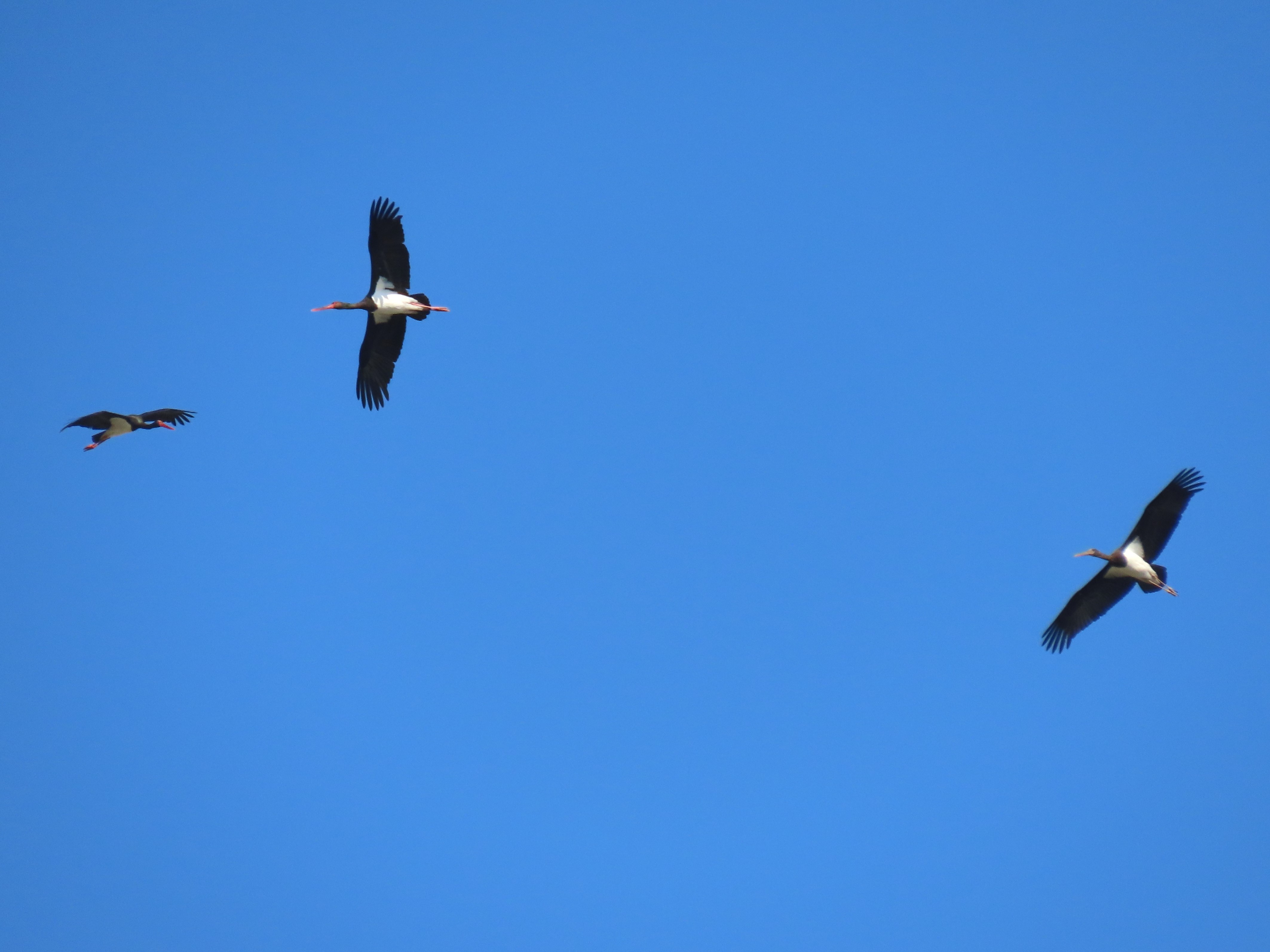
Black Storks during Autumn passage.


Great Egret.  This is one of several bird species that has definately benefited from the artificial lakes. 


Boat-based electrofishing along the shores of the lower part of Lake Ilarion.

Boat-based electrofishing along the shores of the lower part of Lake Ilarion.

Protocol: Boat-based electrofishing along the shores of the lower part of Lake Ilarion

eDNA sampling along the shores of the lower part of Lake Ilarion.

Boat-based electrofishing along the shores of the lower part of Lake Ilarion - many carp were found!

Upper part of Ilarion Lake. This huge feild on left floods completely in Spring and provides a good areas for spawning Carp.  

DOWNSTREAM OF ILARION DAM


The Ilarion Dam's height is 130 m. A significant height at a pivotal position in the landscape. Below it the river runs into a wide valley forms wide open landscape. Above the dam there were narrow upland river deep gorges and rocky mountains. 


About 3 km downstream of the Dam. 


Photo from Rinnio Bridge 7 km downstream of Ilarion Dam when at the lowest-possible water level of Polyphitos Lake (looking upstream; Nov. 2021).

Photo from Rinnio Bridge downstream of Ilarion Dam when at the lowest-possible water level of Polyphitos Lake (looking downstream, Nov. 2021). 

In Autumn, the landscape of the area below the dam - for nearly 7 kilometers- is a varied riparian wonderland (Sept 2023).


UPPER ALIAKMON RIVER AND ITS CONFLUENCE WITH ILARION LAKE


Electrofishing by combined boat and long-cable generator in the estuary of the Aliakmon with Ilarion Lake (Sept. 2023).

Five-person team electrofishing within our boat in a reach of the upper Aliakmon near Neapoli (Sept. 2023)

Double-estuary mudflats of the Sioutsa tributaryu and the Aliakmon main stem in the upper part of Lake Ilarion (early November, near the Lake's lowest water levels). The footprints leading into the mudflats on the bottom left of the photo are Brown Bear. 

LAB WORK - WRITE-UP - COMMUNICATION - TEAM CREDITS


Scientist-activist - A good life


Scientist-activist, A good life 

Nikos Kazantzakis in his Report to Greco, refers to the Golgotha Hill we must climb in life. 
"Only by means of hope can we attain what is beyond hope" he writes.

"Every man worthy of being called a son of man bears his cross and mounts his Golgotha. Many, indeed most, reach the first or second step, collapse pantingly in the middle of the journey, and do not attain the summit, the summit of their duty: to be crucified, resurrected, and to save theirs souls. Afraid of crucifixion, they grow fainthearted; they do not know that the cross is the only path to resurrection. There is no other path".

Nikos Kazantzakis, Report to Greco.


-------------------------------------------------
...about the photo above: 

Exploring the Erassinos Stream in Attika near Athens, and finding a whole riparian forest leveled by bulldozers. Total wreckage and dismay. Climb up that mound of fallen logs and look beyond for anything left standing... 


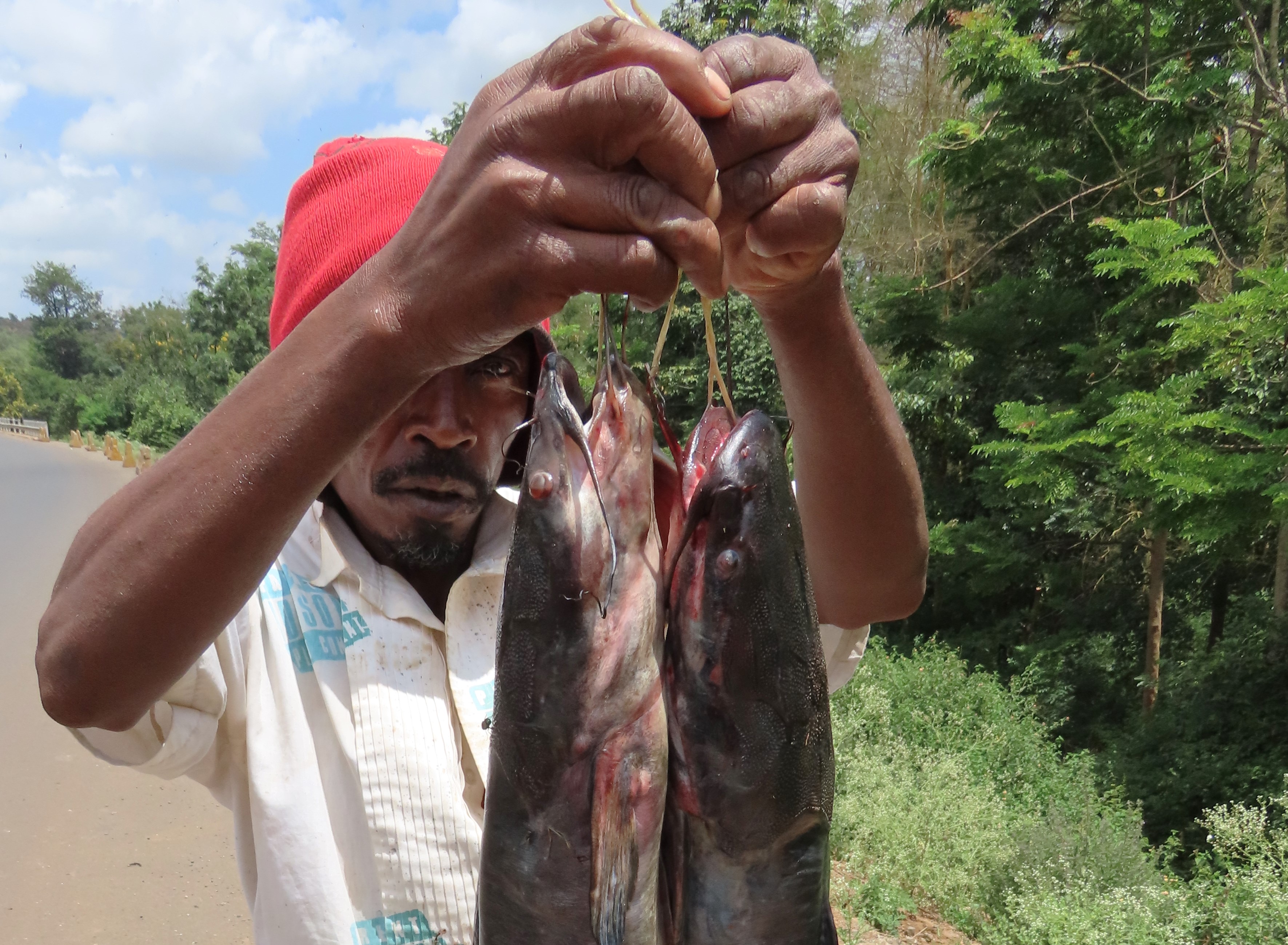
Kenya: The People


Kenya: The People (8th of 8 posts on the Kenya Fam trip - 7th to 12th February, 2024)

I just want to say a big thank you to so many wonderful people we met in Kenya on this very very short first trip this February ! 

Of course posting their photos here is just a personal reminder for me, but it helps me. 

All my love to Kenya! 


We wish to thank DERRICK MURIUKI GICHIMU (pictured above with the hat at Left) and his company Kompact Safaris  in Nairobi for car rental service and all assistance in the field. Highly recommended! https://www.kompact-safaris.com/


Kenya: Nairobi National Park


Kenya: Nairobi National Park (7th of 8 Posts)
February 12th 2024

There are many reasons to admire Kenya - one being biodiversity conservation. A showcase of this is the capital city's own National Park. 

Nairobi National Park is a real protected area, not a city park. It is a slice of megafaunal "shock" with wild-like plains and woods and valleys, streams and artificial ponds right next to the city. You see the city in the near-distance, but are really quite apart from it. A unique feeling.

We took a full day self-drive of the park, going all the way southeast (Athi Dam), walking with an armed warden at Hippo Pools and visiting many stream and artificial pond sites. It was a long day and it was really hard leaving the place. We wished we could stay overnight. I mean we barely saw the whole area, it is 117 square kms in size! (and this is considered small by park standards here...). Of course, this is a one of the word's best birding hotspots (over 520 spp. have been recorded); we saw around 70, primarily because we were also looking to see lions....

The National Park was created in 1946, it is an important testiment to saving megafauna. But there are real challenges in keeping this place wild. The government-sponsored census conducted in 2021 noted that the southern dispersal areas where animals used to roam have been largely blocked by ‘fences, land subdivision into commercial and residential plots, and expanding human populations.’ We saw this, but there is still no fence along most of the southern boundary of the park, so there is still connectivity. In fact, the southern boundary, which follows the undulating Mbagathi River, is quite open despite being so near the city. The animals can move in and out of the park through a semi-natural areas stretching to the Athi-Kaputiei Plains to the southeast. Nairobi National Park thus forms a vital aspect of the greater Athi-Kaputiei ecosystem allowing for the seasonal migration of many of Nairobi National Park’s animals.

So what is it like in terms of viewing mammals? 
We saw no Wildebeests, Warthogs, or Waterbucks and no big cats... We did see Zebras, Eland (a small herd), Grant's gazelle and Tomies, lots of Impala, and a few Buffalo. Also a herd of Coke’s hartebeest, known locally as a “kongoni” and a single Spotted Hyaena. The rhinos (some whites, are introduced; but there are some introduced blacks too). We saw at least 4 or 5 rhinos. It was great to see many Giraffes (even a dead on, a young one, killed by a lion). Vervets and baboons were common and in some of the many ponds we saw Hippos and Crocs. We were lucky to see a single monitor lizard at Hippo Pools and an agama-like lizard on the rocky plains. So it was almost full of wildlife to our unaccostumed eyes.

Despite the megafauna still present, big game populations have drastically declined. The city and its built-up surroundings are expanding. National infrastructural development including the Standard Gauge Railway are listed among the factors that have diminished range-land and wildlife. Warthog, waterbuck, hartebeest, and gazelle populations have declined by 70%, from what they were just forty years ago (KWS 2020). 

The park is still a conservation hotspot! it is not a tourist honey-pot. 
I guess there is still hope and initiatives to expand protection. Cooperation with local communiteis beyond the park must continue. And this part of a greater good; part of Kenyan's identity: landscapes rich in wildlife.

(All snap-shots on this post my own; please give credit if you use them; maps gleaned from the internet- you can't find a proper map of the park these days...).


So why did we not see any lions?  

Why does everybody ask this question? (!!)

I think you need luck. Two of us heard a lion and we found a day-old kill (see above, ...young giraffe, the lion was under that bush!). A total-area census of lions within Nairobi National Park found 35 individuals, including cubs, in 2011. An incongruous detail in wildlife populations is that these cats have actually been increasing within the park as there may be immigration into this sanctuary from the surrounding landscapes. The population estimate of lions in NNP in 2019 was 45 with 4 to 7 cubs (National Park Management Plan). Large carnivores following their prey outside the Park to the neighouring pastoral areas on the Athi-Kaputiei Plains in the wet season are often killed by landowners to avenge depredation of livestock, human injuries or deaths. Between 1998 and 2004, at least 87 lions were killed in the Athi-Kaputiei Ecosystem (Ogutu et al. 2022). 


MAPS OF NAIROBI NATIONAL PARK 


Recent photo from space showing the specific outlines of the park (NNP) and the growing sprawl of the big city...


UPDATE May 2026

An AI image generated for a land-use protest.


At the eastern-northeastern part of the park an area with productive glades is planned to be converted in to a multi-use urban park area (within the N.P.). Bottom images show conditions today (bottom-left) and the planed development (bottom-right). The controversial project ($320 million development mega-project). . The plan involves relocating and expanding the 64-year-old Nairobi Animal Orphanage, constructing a multi-billion-shilling visitor center, and adding large parking lots (1,300-vehicle car park lots) to support the adjacent Bomas International Convention Complex. Even though this area may seem small in terms of the size of the N.P. (about 37 ha) within the National Park, there are a lot of people apposed to it. And for good reason: The N.P. and protected areas next to the megacity are already too small to effectively  protect the ecosystem workings of broad-scale mammal-rich landscapes. 


References:


CWS. Nairobi National Park Management Plan, 2020-2030.

Mwangi, F., Zhang, Q., & Wang, H. (2022). Development challenges and management strategies on the Kenyan National Park System: A case of Nairobi National Park. International Journal of Geoheritage and Parks, 10(1), 16-26.

Ogutu, J.H., Norman Owen-Smith, Hans-Peter Piepho, Mohammed Y. Said, Shem C. Kifugo, Robin S. Reid, Helen Gichohi, Paula Kahumbu, and Samule Andanje (2013).Changing Wildlife Populations in Nairobi National Park and Adjoining Athi-Kaputiei Plains: Collapse of the Migratory Wildebeest The Open Conservation Biology Journal, 2013, 7, 11-26