Saturday, April 26, 2014

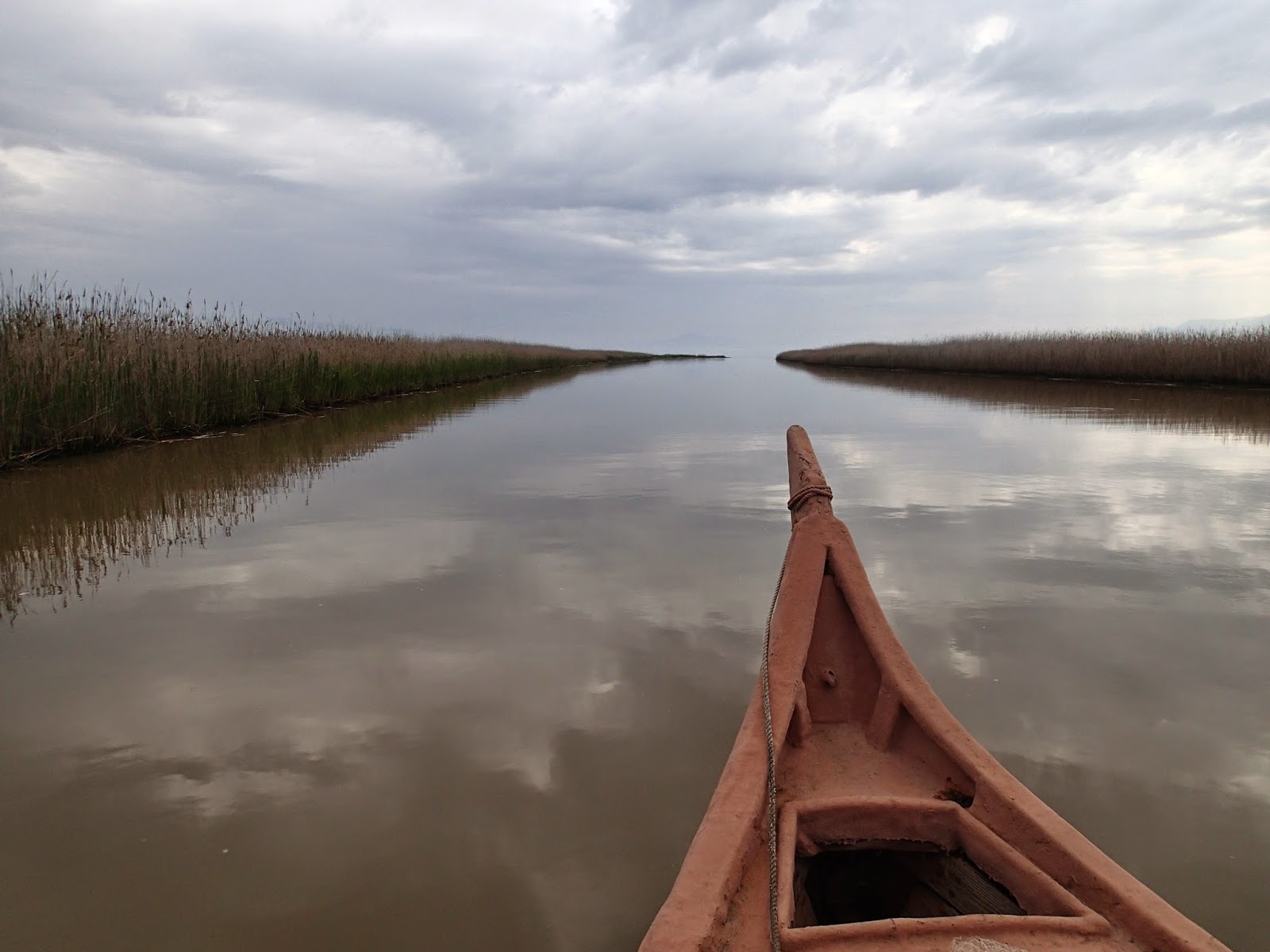
Buyuk Menderes Delta, Aegean Turkey


Late April 2014

Turkey is a fantasy-destination for us Greek naturalists. Many of our islands are just a few kms away; the thought of exploration across the straits is constant. And we have deep emotional ties with Anatolia; before 1922 many 'Asian' Greeks, the Rumlar (Romioi), lived here. A massive population exchange changed everything. So, "going back" to Anatolia is a pilgrimage. A major nature-oasis is the Delta of the Great Meander. I first visited in August 1989. Then I had stayed with the fishermen on Karina Lagoon...My first wild-travel adventure alone. Now a Greek-Turkish research team explores the Great Meander's waters and its fishes- what a gift for me to be part of this! I hope these snapshots share my excitement and inspire nature wonderlust. I really hope more people will work to protect these waters, within a world-class National Park. 


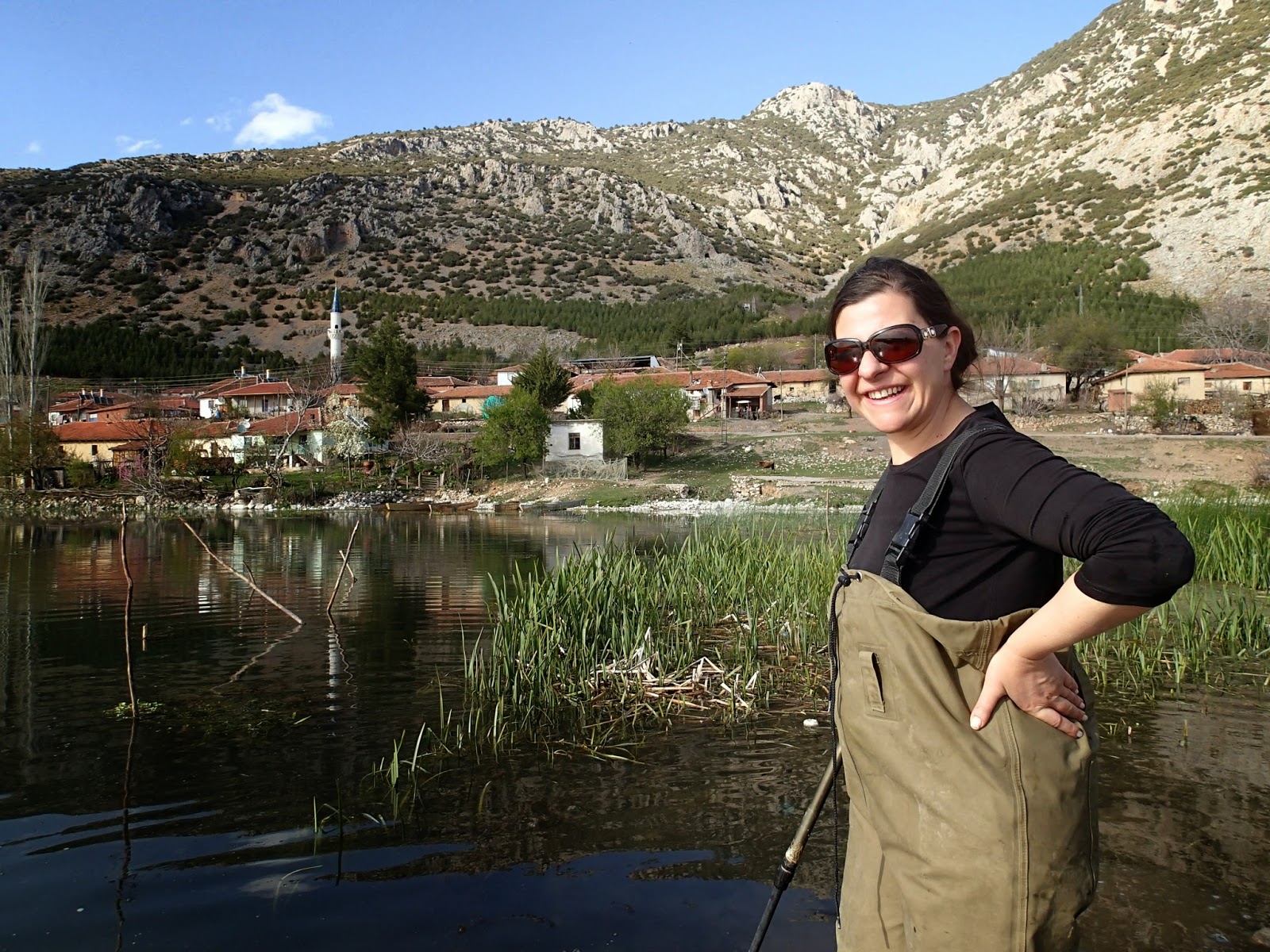
The Great Meander near Lake Bafa; this part is impounded by a "regulator" - a kind of weir near the Highway towards Bodrum.
Huge Grey-Mullet in the turbid waters at the Highway Bridge, Lower Gr. Meander. 

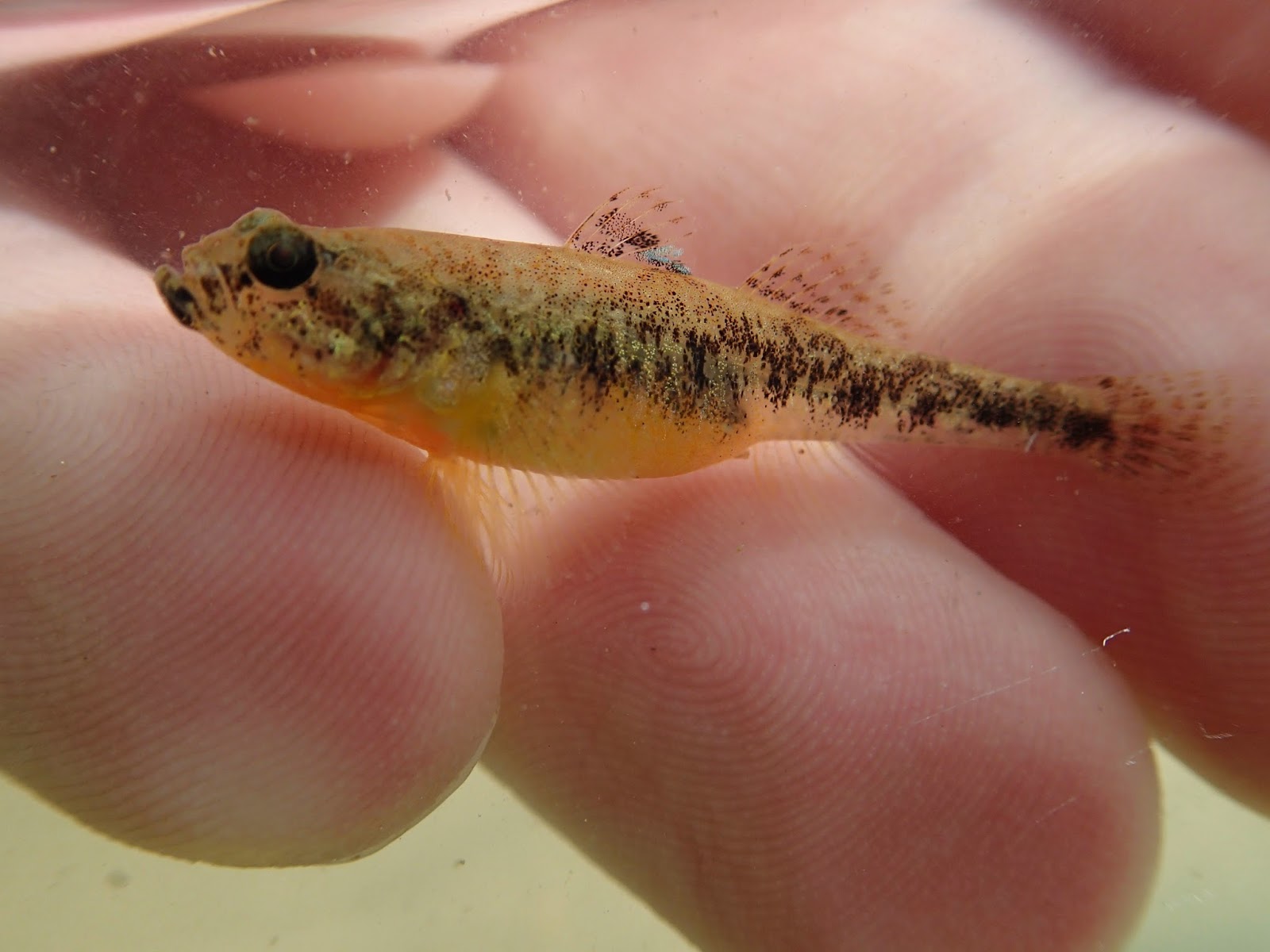
Prize-of-the-day: Knipwitschia cf caucasica, a dwarf goby, female. I had heard that the species inhabits the Delta, this one was found in the river's main stem below the Bafa weir.
The endemic river fish - Vimba mirabilis - young fish; this one in the lower Meander within the National Park boundary.
Aggressive catch of Spotted Sea Bas and mullet Lower Gr. Meander.

A catch at about 10 kms from the river's mouth. Mostly Grey-mullet and a nice Carp, among others (10 spp).
Majestic Lake Bafa. Formerly the river entered part to the lake and created these wetlands; the background is a sensational rock-scape - perfect for Anatolian Leopards...(now probably extinct).
Dalmatian Pelican that was fishing in the river near our boat. A small colony probably still nests in the Lagoons, but numbers low. 
Formerly, a Greek village, the old Doganbey, on the lower slopes of Samsun Dag (Mt Mykale).
The old Greek village hospital, later school. Now the restored National Park Information Center. Great job Turkey!
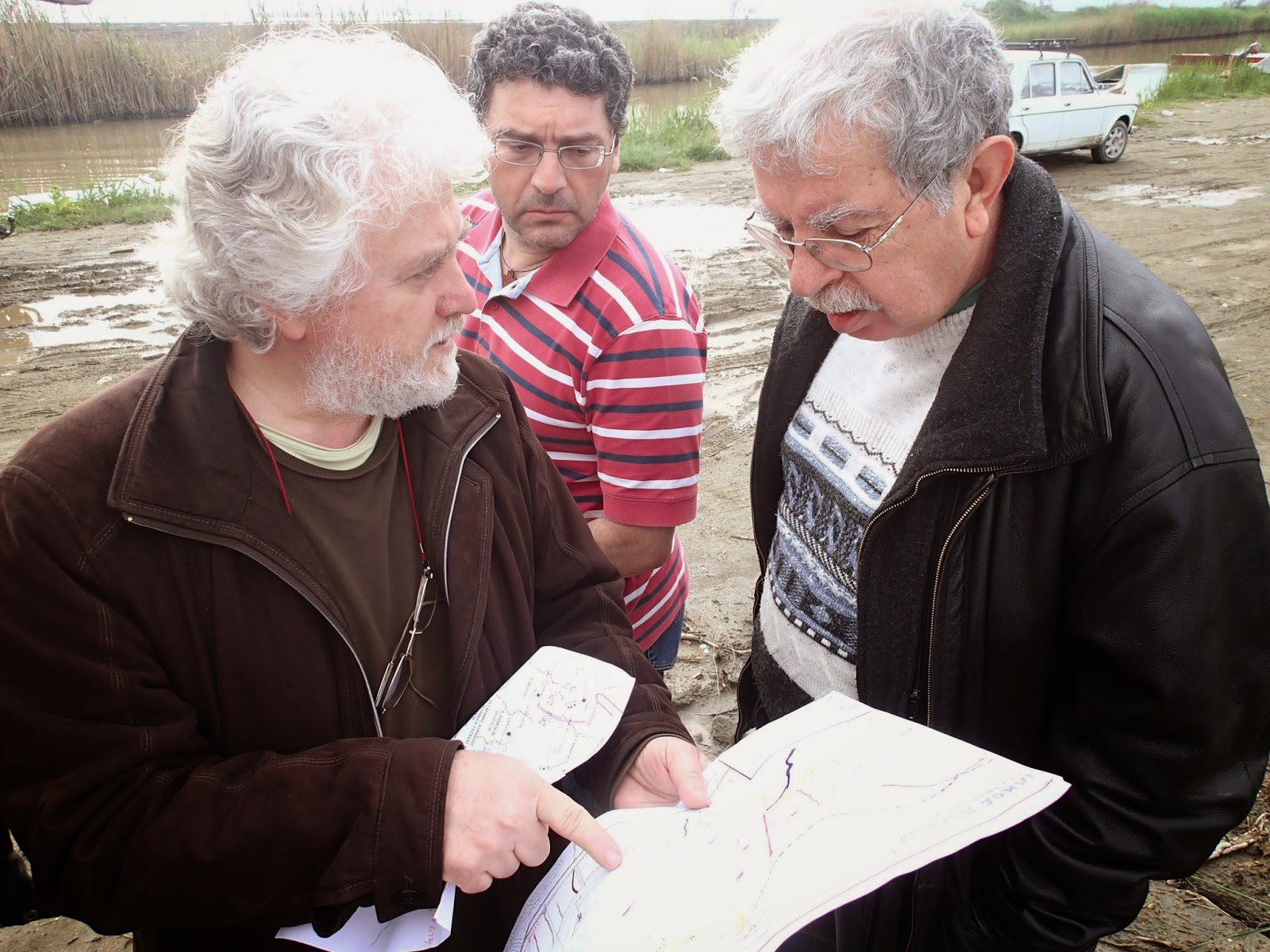
The old fishermen interviewed by Kaan Yenice, Biologist. Here we learn about the massive "Granios" fishes that enter the river - some of them over 80 kg in mass!!!
The "Granios" Argyrosomus regius. This small individual is probably from a fish-farm; it was served at the Karina Balik Restaurant.
We work on a boat - the river is deep, turbid; what an adventure. Many many fish caught!
The Great Meander - Buyuk Menderes. Along with the Evros and Axios it is one of the largest rivers entering the Aegean.
The "Kaynak" (a warm spring) near Doganbey Village next to Karina Lagoon (photo by D. Zogaris).
A Syngnanthid pipefish, probably in the genus Nerophis. Common in the vegetation of the lagoon and spring.
Two potential competitors. The American Mosquito Fish and the local Killifish (females) at the Kaynak.
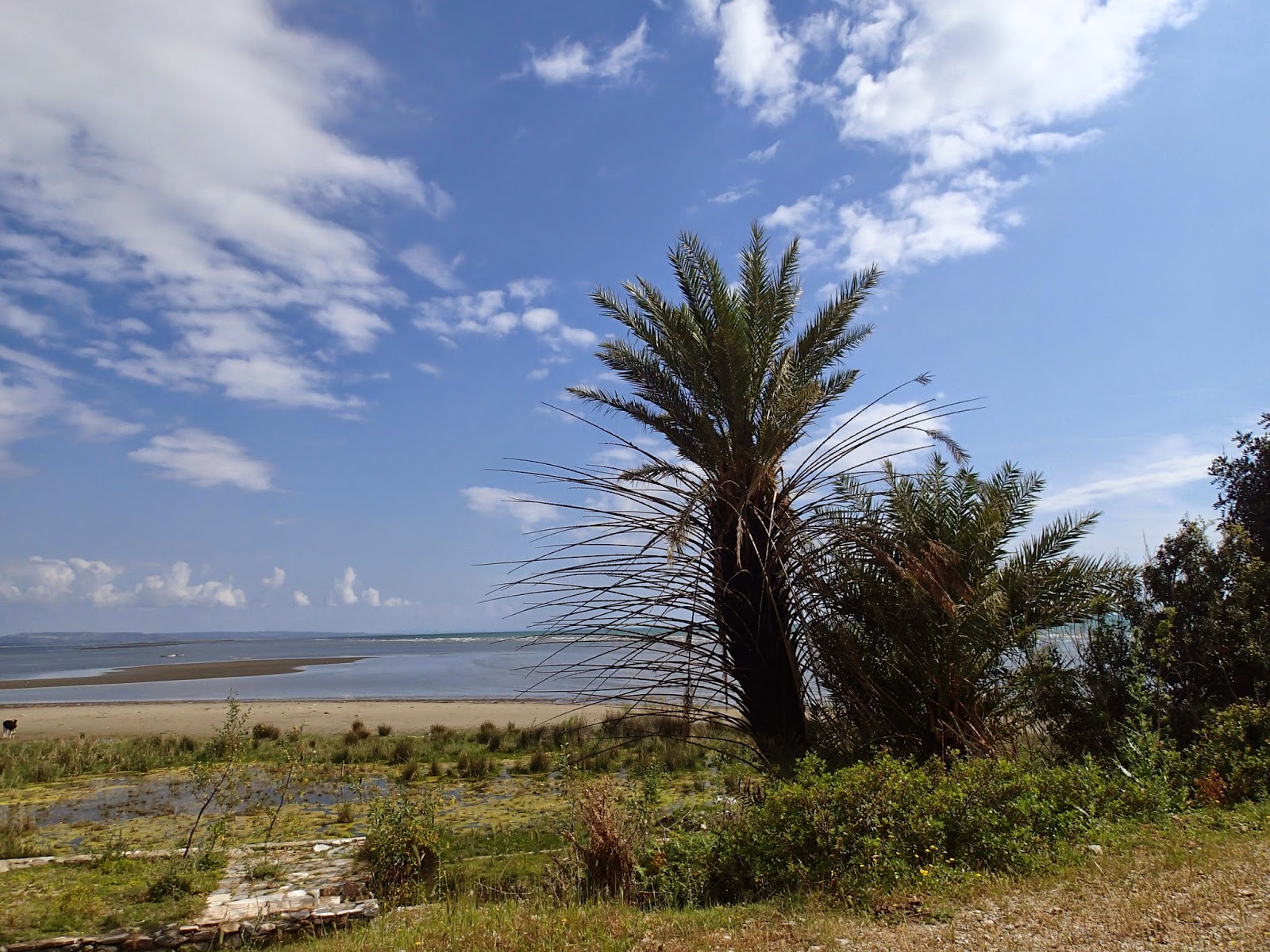
At Karina there are about a couple of dozen palms that look like Phoenix theophrastii. Theophraste's Palms are one of the rarest trees in the Aegean - are they really this species?
Fires have swept through and the southern side of the mountain overlooking Karina Lagoon have been burned but the Palms do fine.
Phoenix theophrastii is an endemic palm of Crete and SW Turkey - look at the short flower stalks and tiny dates on these trees... please can anyone confirm this ID????
The river lower Meander, meanders next to the ruins of Miletos - a great nature spot for fishes and birds!
One of my favorite fishes - "Yilanbalik" - the migratory Eel. Still common in the lower river and lagoons.
The local Killifish, closely related the the widespread Mediterranean Toothcarp, now these Aegean fish are called by some, Aphanius almiriensis; this is beautiful male. 

View westwards towards Samos - barely visible at the tip of Mount Samsun. Karina Lagoon sparkles in peace.


Tuesday, April 22, 2014

Sperchios and Maliakos: KRIPIS project in progress


Apostolos Siapatis fry-netting and others in boat observing our progress in deep mud.
April 7th to 9th 2014

Both departments of our institute (IMBRIW) are working on fish-based aspects of integrated management research at the Sperchios River Basin Area. This pioneering integrative project (the KRIPIS project) also involves other aspects of water and resource management but I focus on the fish here.... This month we had a very good first info-gathering trial working together in the Delta of the Sperchios - within the shallow and tidal Maliakos Gulf. The tidal influence and estuarine appearance of the Gulf are extremely rare environments in the oligotrophic Aegean Sea. Critical aims for the ichthyologists at the beginning of the KRIPIS project are to build a descriptive knowledge base of this unique ecosystem and to introduce fish sampling/monitoring methods so we can get some real data. A first step of course is to resort to getting a lot of help from the local fishermen. We'll be back soon.


Apostolos and I trying to work the fry net in "deep" water at the Livari Enbayment - an open lagoon-like water body in the Delta.
Working inside and outside the boat. It was a rainy day- a northern feel. Fascinating tidal estuary experience for us southerners.
The Sperchios delta has huge tidal mudflats - something very rare in the Southern half of the Aegean. Waders were in full migration - we spotted a few Mute Swans and Flamingos.
Our drag-net contraption "rolls" on the muddy bottom behind the boat. Its a quick-fish trap to see what's in the turbid bottom.
Alkis Economou and Stephanos Kavadas collecting samples from the fry-net. This little Seine-thing works well in very shallow waters. 
The shallow tidal embayments are famous as nursery grounds for Sole (Solea sp.). Even for this fishermen report a decline. 
Watery, muddy, wild world. Stephanos and Alkis working the fry-net. Ok, now we know it does'nt really work in deep water!
Prize-of-the-day: a dwarf goby, this is a robust-looking male. I assume it to be a Knipowitschia sp. collected in formalin solution! 
Stephanos and Apostolos sorting samples on board. What we collected is our first window into knowledge.
Alkis with sample bottles - some with formalin some with ethanol. Nikos the local guide, knew about throw-nets too.
Stephanos, Tassos and Alkis planning ahead: A great team! Muddy roads, small canals, mudflats - the Delta is a labyrinth.
Mugilids (Liza sp.) abound in shallow brackish waters of river-mouths and lagoons; these were caught with a throw-net.
At the small harbour of Molos we interviewed fishermen. The eutrophic waters are unlike any you see in southern Greece.
Gill-netter in a shabby state: Fishermen report a huge decline and point to illegal fishing and overfishing as problems.
One of the fishermen with hundreds of meters of gill-net. We discussed the problems. The catch was not good today.
Marbled Electric Rays (Torpedo marmorata) caught by the gill-netter at Molos. Fishermen mentioned several ray species in the Malliakos (Big ones too - over 30 Kg). 
The Mantis Shrimp, Squilla mantis, a stomatopod shrimp that is harvested in large numbers. In Greek it is known as "Katsarida" (=roach).
The invasive Blue Crab Calonectes sapidus is a problematic over-abundant species with low economic value; its impacts have not been fully assessed. 
River meets the sea. One of the most intriguing environments for ichthyologists. Here we are reacheing the moth of the old channel of the Sperchios.


Friday, April 4, 2014

Lake Isikli Turkey


March 26th 2014

In Greece we have several large inland lakes that are really neat and full of endemic fish. In Turkey there are lots more - whole 'lake districts' exist. And some of the lakes are really very beautiful and unique. So today I thought of sending you off to Isikli Lake (pronounced something like "Ishiklu"....).  I visited this month with Turkish friends who are professional ichthyologists; I got a very subjective view.

To get there you should fly into the airport of Denizli - a pretty and modern town of half of million people near the famous site of Hierapolis, Laodikia, Pamukkale and other such ancient wonders. Then you rent a car - even at the airport - and follow the gps navigator to the north shore of the Lake. Its a very easy, peaceful and safe trip. All photos in this post are from the marshes further east of Isikli Lake proper, at Gokgul village (Goekguel = sky lake). The entire lake-marsh system is about 97 square kilometers. Its big and spacey, like being somewhere in Utah. I would not be recommending this if it was not well worth it. It is amazing!

First thing are the wondrous cold springs. Along the northern shores dozens of really cold waters seep through pebble beaches, flowing into crystal lake waters. The lake is high - up at 820 m. Its located below a limestone rocky mountain - Ak Dag (pronounced Akdaaa.... I was told).

Ok, what to see and do?
Its a designated IBA....Birds - bring binocs. Huge cow herds, rare endemic fishes, donkeys, pristine traditional villages..... The lake has fish resturants, Zander is served fried or grilled. And despite the Ak Party craziness, beer is still served at the "Family Restaurant"!  You eat your fish, DRINK YOUR BEER, while watching the wild fishes through the crystal clear lake's surface. Gokgul is worth it.

I went 'fishing' (collecting and studying the fishes...of course) - a Euro-Turkish initiative supported this. This area is worthy of real conservation. It must be carefully protected for its spectacular biodiversity heritage - from landscape, to village culture, to tiny killifish. One unsettling change was a huge chanalization river engineering construction on Kufi stream - a waterway that enters Isikli. Otherwise, pollution also seems to be a problem. More research and care are urgently needed!

I thank the Turkish friendship that made the "work" possible. We had great help from University of Ankara and the University of Pamukkale colleagues. I urge all naturalists to visit Anatolia and to promote conservation, please mention that you are visiting to appreciate nature.....


East of Gokgul - total silence. The canal is deep, marshes spread out as far as the eye can see.

Near the spring's inflow. Water is clear, full of plants, very very cold. We are electrofishing. 

Professor Cevher from Ankara knows lakes very well.

Biologist Kaan from Ankara really loves these waters. 

Flat open country; cattle coming in for the evening.

The limestone mountain, Ak Dag, drops into the lake and gives it snow-melt spring waters.

The lake is shallow, 7 m at its deepest. Huge marshes surround the lake. Its a very quiet place.

Gokgul village scene. Willows are comming into full leaf, Sparganium marshes still growing.

Gokgul village scene with Kaan, Pinar and Cevher carrying nets and buckets.

Anatolian Lakes are famous for their rare Killifish; this is Aphanius meandricus;the rare endemicIsikli Killifish.

The local Killifish species competes with alien American Mosquito Fish in the lake; but fortunately the invasive's numbers were low now in early spring.
An unidentified very young Cyprinid fish. The lake has some extremely localized range restricted endemics.


A pregnant endemic Gudgeon. Gobio meandricus I assume. They were quite common.
Rainbow Trout: An alien we did not expect to find in such numbers; the small fry we found show that the species is reproducing here.

Rainbow Trout: Small fry found among pebble spring-fed areas: proof of reproduction in the wild.
A beautiful loach: perhaps Cobitis fahiraea. 
Closer look at the Cobitis fahiraea -one of nine species collected at Gokgul. 
The ephemral Kufi stream that enters the lake (Ak Dag at L) is being channelized....


Monday, February 24, 2014

Sperchios River: KRIPIS Project begins!

Alburnoides sp. Sperchios - A local endemic to the river, now being described! (Photo by D. Koutsogiannopoulos).

February 2014

David Koutsogiannopoulos and I did some electrofishing in the Sperchios river basin - a river basin about 2 and something hours north of Athens. This was practically one of the first field reconnaissance trips for a new ambitious project initiated by HCMR on the Sperchios (the KRIPIS project). The river basin, its delta and the marine waters of the Gulf will be the object of an in depth study for the next one-and-a-half years. The area is worth it: A hive of biodiversity richness and a biogeographical crossroads - its waters are still poorly studied. And it is in need of careful monitoring and conservation management too. Good luck to the project! And good luck to the fish!

All photos taken by David Koutsogiannopoulos on February 21st 2014, at one tiny spot in the lower Sperchios Drainage.


Barbus sperchiensis - a small barbel distantly related to Barbus cyclolepis - unique to Thessaly and the Northern Euboicos drainages. (Photo by D. Koutsogiannopoulos).

Pungitius hellenicus - one of the words most range restricted fishes - found only within 4 sq. km. in the lower Sperchios wetlands. (Photo by D. Koutsogiannopoulos).

Pelasgus marathonicus- a species originally restricted to the Western Aegean drainages. (Photo by D. Koutsogiannopoulos).

Rutilus sp. Sperchios. Yet another unique fish of the drainage - related to Rutilus ylikiensis. (Photo by D. Koutsogiannopoulos).

Squalius vardarensis - an element of the Vardar ecoregion in the Western Aegean drainage of the Sperchios. (Photo by D. Koutsogiannopoulos).