Sunday, April 14, 2013

Scuba Clean-Up by Dikelas Dive Center - Karystos


April 14th 2013

Met some nice people over at Karystos this Sunday's visit. They participated in a low-key tidy-up of the west beach of Karystos organized by the Dikelas Dive Center. The sea was so beautiful but still rather cool and crisp (at around 17 C at the shallower parts). This weekend outing combined both this small-scale clean-up, socializing with the locals and a diving lesson. What better way to spend a day-trip east of Athens!!


Friday, April 12, 2013

Karystos Wetland & Paximada: With Family


Mid April 2013

On weekends I sometimes go over to Karystos (on the Island of Euboea). My son and my partner join me-we take a drive over to Paximada to walk in the phrygana scrub along the shore; I sneak a peak at the wetland. The Karystos Plain Wetland. As people who know me well should know, this is the place I have studied as a youth - and it is very close to my heart. In winter and spring on good years large areas are flooded - wet meadows, open ephemeral pools, rushbeds, reedbeds and abandoned grazed feilds. Its an important wetland for birds and wildlife in general. But nobody would ever support any attempt to save it - its on private land. The private land owners and the public in general would never concieve of setting up a protected area - even a thin strip of greenspace. Some of the photos below even show some new unfinished buildings in the wetland. These were intentionally built to try to "stop" any conservation efforts there. So...this is really a "temporary wetland". (Sorry for being rather sarcastic in such a sacred conservation battleground).

On this Sunday drive it was soooooooooo windy - that you couldn't even hold up a camera. Anyway, these are some results:

  • Two Glossy Ibises were about and aloud very close views;
  • Most of the sandpipers where Wood Sandpipers; but the odd Ruff is also visible as are two Little-ringed plovers;

For me, and my impatient teen son - that's enough. My partner even picked a couple of Anamones for her mother. How sweet....


Wednesday, April 10, 2013

Join the Athens Bird Race on 13th April 2013


Mid April 2013

Bird racing is a not really a sport but it can be competitive, a great chance to participate in something where you really "study natural history". Its for fun! And this is difficult now-a-days. People are too busy, tied-down, overworked, economically depressed. Mobilizing yourself and a team of two others to get into a car and rally round the prefecture to find as many species as possible needs some inner motivation.

Why do we do it?

These are some quick thoughts:
  • It really is like hunting- the inner instinct of going for the trophy catch - bringing back memories.
  • Its also like "collecting" or even shopping(!!!) - you pay to find instances of pure natural splendour! 
  • It is successful in creating excitement in new in-comers to the hobby - you get to see dozens of new species and places alongside the experts.
  • You may even live a "peak-experience" in nature and these are especially important to new-comers.
  • Going on a trek with "meaning". Racing creates meaning: you are out there to find-record-understand-appreciate.
  • It lends attention to places - and many special places are threatened!
  • You become sociable - you see the competitors; you get to talk to them in the end of the day. 

If you want to know how it "feels" see a former article of mine:  http://www.bio-e.org/lib/bird-race-athens

This year as always many volunteers make the bird race possible; if you want to be a part of this please see the Hellenic Ornithological Society's site: http://www.ornithologiki.gr/page_cn.php?aID=1508

(The first "photo-collage" is from the USA, the Crossley ID Guide by Richard Crossley it is a new way of showing bird ID field marks and Jizz - fantastic work! In this case the Sharp-shinned Hawk is shown).

2011 Bird race at Tritsis Park, Athens, at around 7 pm in April. Everyone was exhausted!

From the http://www.birdingisfun.com/  blogsite with a lot of  evidence that...its fun!!


Friday, April 5, 2013

Confusing Carcharhinids: A Field Guide


Early April 2013

Carharinids are a shark group that is usually really difficult to identify! Usually you must look at the caption before confirming an ID of any photographed Carcharinid. Thats why the've been called "confusing carcharinids". Here, I'm reviewing a "Field Guide for Sharks of the Genus Carcharinus" by Matthias Voigt and Dietmar Weber.  I was really excited about the book when I first got it and flipped through it. Then I read a critical review by David Ebert, Director of the Pacific Shark Research Center (see http://www.southernfriedscience.com/?p=11931). Some of the things in this critical review ring true but maybe this experienced shark-man is a little too negative or overly-critical - not sure.... I understand, this appealing book may have some glitches, but it is a creation by two young men who really want to do something positive about sharks - create a field guide! The first author is a young guy who probably has this recent love affair with sharks, sharks are not his major academic pursuit. The second guy is an amazing scientific illustrator. 

Since I have written and edited natural history books, I know too well that "the devil is in the details". The authors need to have a couple of top elasmobranchologists review the book and need a really good English copy-editor too. So I would look forward to a revised edition. But basically, there are two things which I can say about this shark book, but of course I am not an expert on sharks: 

1) It really is field guide-like and this is showcased through the excellent scientific illustrations and consistent description. Ebert, the elasmobrachologist says: "The lateral view color illustrations of each individual Carcharhinus species are perhaps some of the best I have seen for this group of sharks, rivaling the outstanding color illustrations by Roger Swainston in the recent Sharks and Rays of Australia (Last and Stevens, 2009), and appear to be fairly accurate, at least for those species I am familiar with". So the book, although rather expensive, does have amazing technical illustrations and carefully researched descriptions. These help you to explore differences among very similar species. (The authors could have added R.T.Peterson's field mark arrows to highlight field id marks...). A good field guide helps you learn the key ID differences.

2) The text is a bit rough (sprinkled with grammatical and usage errors); the English could be much much better -its almost as bad as my Greek I think!!!  And the book could have described how sharks behave, their comparative morpho-dimensions and general "looks in the water". But it does say what potential "misidentifications" are possible for each species. (Anyway, its perhaps too "scientific" or "overly technical" a description I think - again the authors should learn to give more concise form from top-notch birding guide books).... BUT this book is a field guide!

In many respects this "scientific field guide" is really appealing as a book. And all who flip through it will realize how difficult it is to create a good field guide. The distinguished Natural Historian publisher, Fritz Pfeil really says it right in the preface; and to paraphrase him: You really need a field guide...you can't find all information on the internet nor in the taxonomic papers. And this kind of literature is not accessible to everybody. So you need a field guide book. (Have a look at the specialist titles available at this natural history publisher: http://www.pfeil-verlag.de/ef1.html.)

This is why I am advertising this book here. We need books like this - more of them. We need to be able to ID sharks not just by their DNA but also by their jizz - how they act, how they move, their dimensions in the water and careful comparison among similar species. I recommend the book. 


Tuesday, April 2, 2013

Campaign: Rafina River!


March 31st 2013

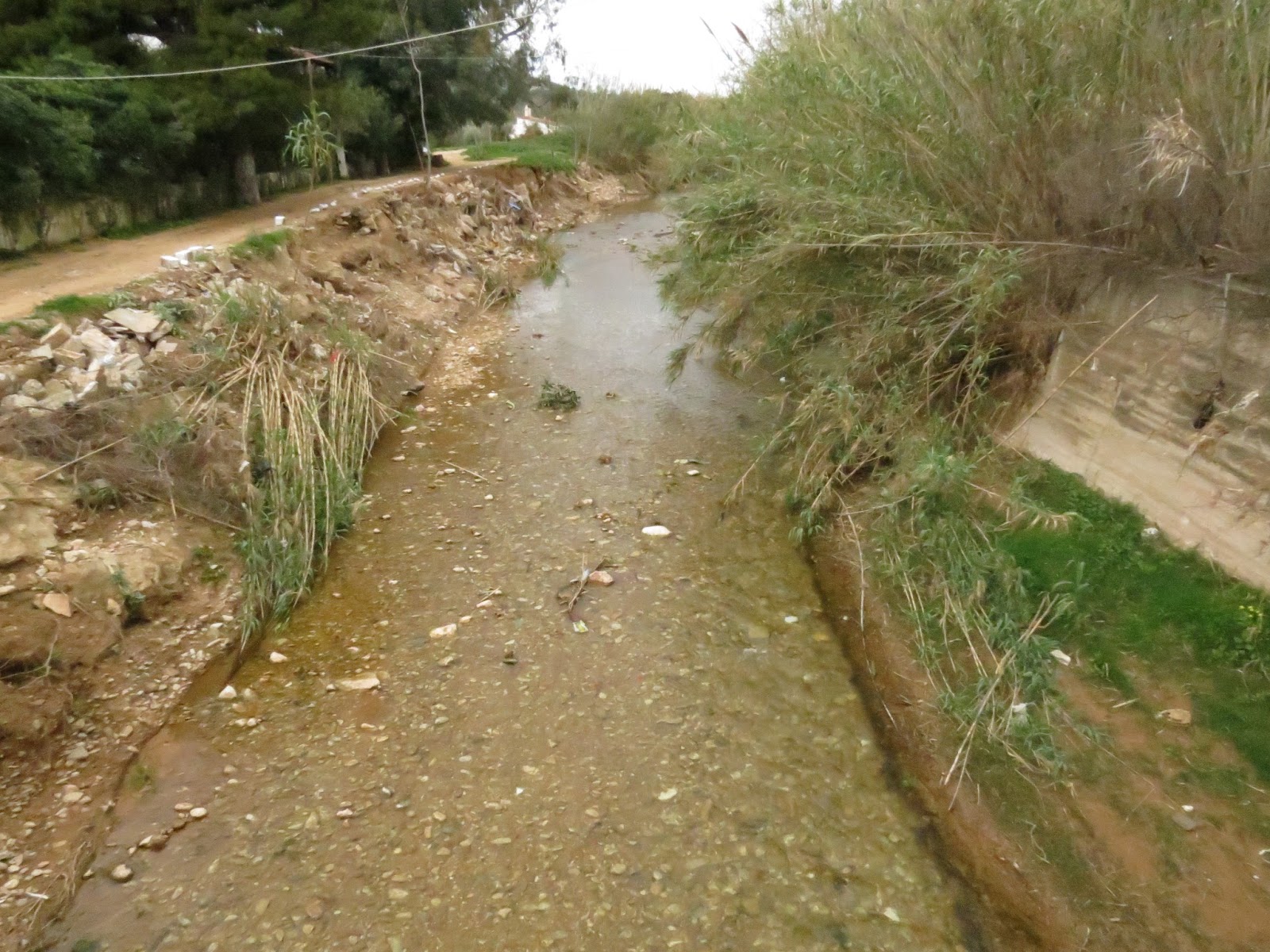
Biggish meeting at the Rafina High School auditorium for the "Natural Treasures of Rafina". Rafina is a small port on the east coast of Athens' Attika Peninsula. A big stream, the Megalo Rema of Rafina, has its river-mouth just south of the Harbour. We've been birding hard here since 1996, the HOS has this place high on the priority list for locally important protected area proposals. So generally many conservationists want to see the river and the river-mouth protected. The local NGO "The Nireas Association", organized a really big meeting for conservation back in April 2004, almost a rally of sorts - in favour for specific conservation initiatives along the coast - including the stream. Nothing important happened. Now, we participated in a second public meeting, it was good this time. Local authorities seem interested - especially after the catastrophic flood. A couple of days later, Ioannis Karaouzas (HCMR) and I were back walking the river surveying for flood damage, thinking up ideas for restoration proposals. Something good may happen this time.


Wow!! Like an estuary. But its just Rafina stream....


Rafina river mouth from a recent Google Earth image. 

After a little photo-shoping...Did you spot the difference? This last shot is a future desired state... Note the proposed changes: a) Car parking area sent back 20 m on L side of river. b) Right side of river made into shallower sloping area with marshes and pool (rocks that were set there removed). Thats all!!! It will change the place forever if it can be accepted as a restoration measure..