November 3rd 2012
About 40 Kms from the great city of Athens is an old reservoir created by a dam. Constructed in the '30s for drinking-water storage it is off-limits to the public - and that is good and proper. Well.. it's no natural lake, nor is it some sort of protected landscape, yet it's really one of Attika's landscape jewels! Fortunately not many people know this so we are not disclosing the place's name.
DZ and I did an ichthylogical survey of the northern shores of the lake today. Of course I knew how to rapidly descend from the road near the dam without being seen (and nearly got us killed sliding down a steep rocky cliff). The lake is patrolled by guards so one must be really careful. Anyway, my teenage son and I pulled it off Ok...We were in a trance - really looking forward to see the sparkling clear waters, mesmerized by the wetland fringes - it was so so silent!
Unfortunately, the "protection" of this place seriously needs to be re-planned, re-evaluated. Firstly, it is a source-reservoir for part of Athens' drinking water so it must be protected....hunting (we heard shots), fishing (un-regulated), and dirt-bike riding should be better "controlled". However, the most important detail is that due to the drinking-water protection incentive here - we may be able to protect both lake and landscape if we think carefully about this issue.
So, please don't go around talking about this lake as a "destination". Its a secret worth sharing mainly among naturalists and conservationists. I think some kind of action plan or study to protect the surrounding landscape should be drafted ASAP. I mean a no-building, no-roading - that kind of protection (landscape protection - practically unheard of here in Attika...).
Oh! I almost forgot. We caught no fish angling (sampling...). But some kind-hearted Albanians showed us their meagre catch. I have photos: the specimens look like Yliki Roach, Greek Rudd, Greek Barbel (I think these fish are all from nearby Lake Yliki - they are all vulnerable protected endemic species distinctive of the Western Aegean Ecoregion). Now, are these to be considered Non-Indigenous Aliens to this artificial lake near Athens???
My opinion: these fish are living within the realm of the identical Freshwater Ecoregion asYliki Lake (80 kms north of this artificial Lake), so they are adapting to a similar natural-looking lacustrine system with similar "geo-ecosystemic structure". So the concept of the biogeographic ecoregion boundaries helpful here for conservation planning - it may guide us. If you follow my thinking, this means that we have resident "translocated" populations of outstanding rare-and-unique fish species worthy of protecting in this artificial lake.....(think about it a bit). Also, one of the photos below shows a really heavy monster Greek Rudd swimming slowly at the lake's surface- the Albanian fishermen said that some of these endemic fishes may reach 9 Kilos (perhaps they were also referring to Greek Barbel also). So the fishes in the lake are surviving well and getting old too. Now Greek Rudd is found naturally only in the Lake Yliki-Paralimni system so the discovery of the species at our Secret Lake is of some conservation significance.
So DZ and I came back with good photos and had a really good bonding experience - we also enjoyed talking with the Albanians.
I hesitate in showing these snapshots; but I think this blog is such an obscure unknown thing they shouldn't threatened the silence of this place. We're not sooooooo famous yet (despite all these amazing ichthyological discoveries published in this blog...). Anyway, to those who know what I'm talking about...Secret Lake and its landscape...please, Lets help PROTECT IT.
About 40 Kms from the great city of Athens is an old reservoir created by a dam. Constructed in the '30s for drinking-water storage it is off-limits to the public - and that is good and proper. Well.. it's no natural lake, nor is it some sort of protected landscape, yet it's really one of Attika's landscape jewels! Fortunately not many people know this so we are not disclosing the place's name.
DZ and I did an ichthylogical survey of the northern shores of the lake today. Of course I knew how to rapidly descend from the road near the dam without being seen (and nearly got us killed sliding down a steep rocky cliff). The lake is patrolled by guards so one must be really careful. Anyway, my teenage son and I pulled it off Ok...We were in a trance - really looking forward to see the sparkling clear waters, mesmerized by the wetland fringes - it was so so silent!
Unfortunately, the "protection" of this place seriously needs to be re-planned, re-evaluated. Firstly, it is a source-reservoir for part of Athens' drinking water so it must be protected....hunting (we heard shots), fishing (un-regulated), and dirt-bike riding should be better "controlled". However, the most important detail is that due to the drinking-water protection incentive here - we may be able to protect both lake and landscape if we think carefully about this issue.
So, please don't go around talking about this lake as a "destination". Its a secret worth sharing mainly among naturalists and conservationists. I think some kind of action plan or study to protect the surrounding landscape should be drafted ASAP. I mean a no-building, no-roading - that kind of protection (landscape protection - practically unheard of here in Attika...).
Oh! I almost forgot. We caught no fish angling (sampling...). But some kind-hearted Albanians showed us their meagre catch. I have photos: the specimens look like Yliki Roach, Greek Rudd, Greek Barbel (I think these fish are all from nearby Lake Yliki - they are all vulnerable protected endemic species distinctive of the Western Aegean Ecoregion). Now, are these to be considered Non-Indigenous Aliens to this artificial lake near Athens???
My opinion: these fish are living within the realm of the identical Freshwater Ecoregion asYliki Lake (80 kms north of this artificial Lake), so they are adapting to a similar natural-looking lacustrine system with similar "geo-ecosystemic structure". So the concept of the biogeographic ecoregion boundaries helpful here for conservation planning - it may guide us. If you follow my thinking, this means that we have resident "translocated" populations of outstanding rare-and-unique fish species worthy of protecting in this artificial lake.....(think about it a bit). Also, one of the photos below shows a really heavy monster Greek Rudd swimming slowly at the lake's surface- the Albanian fishermen said that some of these endemic fishes may reach 9 Kilos (perhaps they were also referring to Greek Barbel also). So the fishes in the lake are surviving well and getting old too. Now Greek Rudd is found naturally only in the Lake Yliki-Paralimni system so the discovery of the species at our Secret Lake is of some conservation significance.
So DZ and I came back with good photos and had a really good bonding experience - we also enjoyed talking with the Albanians.
I hesitate in showing these snapshots; but I think this blog is such an obscure unknown thing they shouldn't threatened the silence of this place. We're not sooooooo famous yet (despite all these amazing ichthyological discoveries published in this blog...). Anyway, to those who know what I'm talking about...Secret Lake and its landscape...please, Lets help PROTECT IT.
 |
| A mega-fire swept through the landscape in 2009 and back then I was really sadened by the burn of the riparian area. Its bouncing back really nice now - not so much pine, lots of evergreen sclerophylls - including lots of strawberry trees (tasty fruit this season!). |
 |
| Couple of Common Buzzards, lots of birds around today by the way. Lots of Gulls - huge flocks gather in the lake - I think to wash-up. Also you see and hear a lot of small passerines easy here. And we heard Water Rails and Coot in the reeds today. |
 |
| This is November 3rd in the Mediterreanean country of Greece. The lake is clear (5 m. visibility). So it looks like a mesotrophic system? It looks almost Swedish to me. Beautiful water. |
 |
| DZ saying....How to descend into the lake? I was his age when I used to scramble down here with friends Ph. Dragoumis and M. Ganoti (back in 1985...). |
 |
| Reedbed fringe. The lake is rather stable - water levels were lowish. It looked really natural along the riparian. |
 |
| Greek Rudd. This is the biggest I have ever seen in my life. (Press on the photo to enlarge - or better yet copy-paste it to examine head, scales - its omg HUGE...) |
 |
| Greek Rudd. |
 |
| Greek Barbel. |
 |
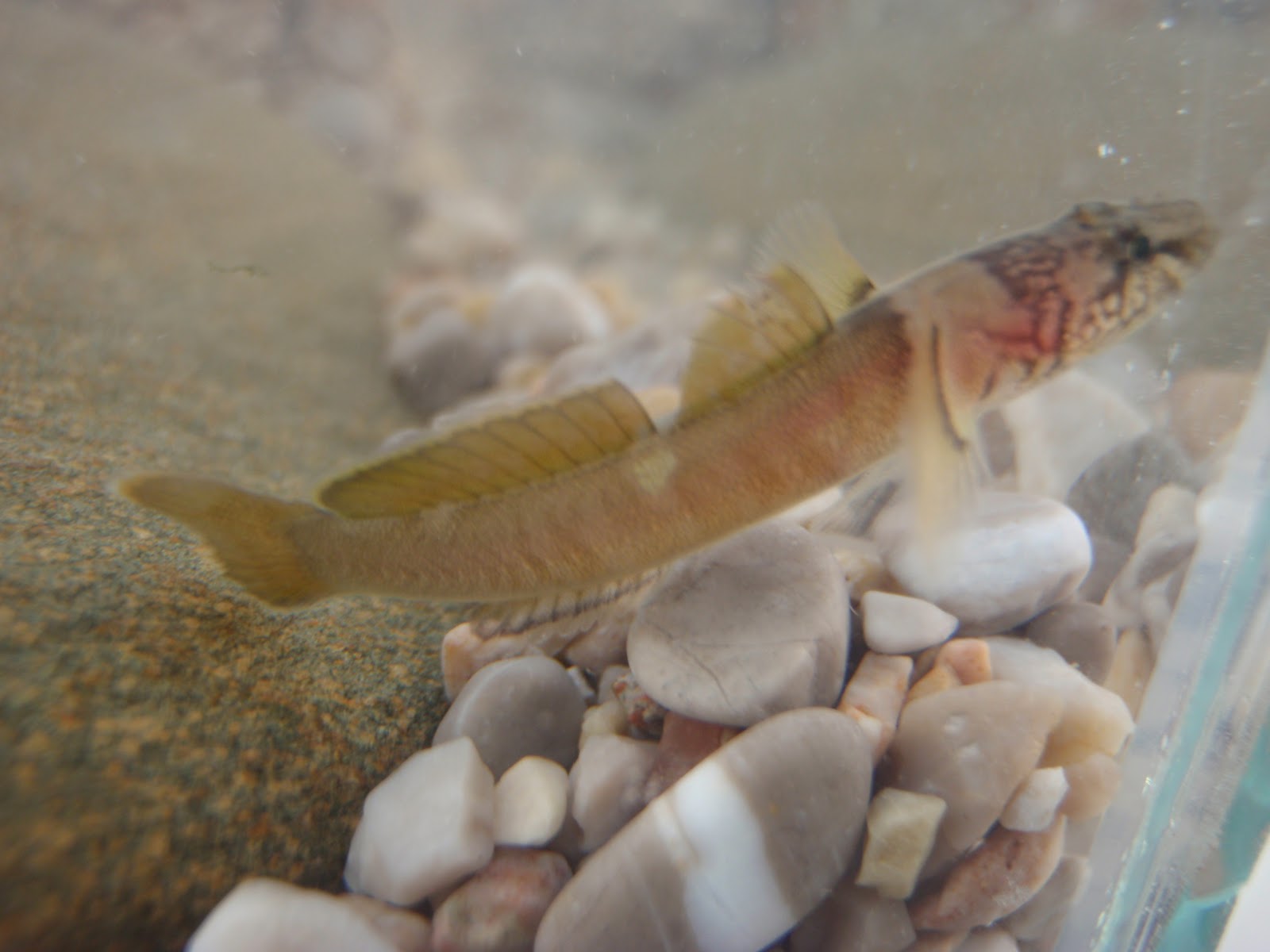
| Yliki Roach. (Now the fish names I give need some work - the species must be collected and carefully identified because Greek populations of these fish have recently been split or are being split by the taxonomists...so the naming here is provisional). |
 |
| The Dam from a distance Guards house on Right. Its impossible to enter just by waking in past the Dam itself without being stopped. Please don't tell anybody negligent about waking through the bush and down the cliff... |
 |
| DZ angling. No luck. This spot is deep- great for big fish. We could see the really huge Greek Barbels come in. Then a few Roach by the reeds. It was really quiet for fishing at mid day. Surprised that no Pelasgus minnows, or Mosquitofish present. Ok. |
 |
| This is part of an artificial reservoir!!! What do those "conservative" bio-conservationists have to say about this! The issue of "artificial" versus natural is not black-and-white! |
 |
| However, I think this is "rich"and natural-looking because its an unusual "stable"drinking-water lake (unlike hydro-electric dams!!!). And there's not much un-natural acting water-level fluctuations and the riparian shores are sloping gradually and the lake is low-elevation. Trust me it is very natural-feeling.... |
 |
| Walking back to the Car. I was surprised again: The landscape is more beautiful after the fire!!! Why is everything so controversial in conservation science? |
 |
| This is a beautiful Valonia Oak. One of the very few in the area - the secondary pine woods once smothered (like carpets) the entire landscape before it was burt. Trees like this need to make a come-back. |
 |
| Albanian fisherman. He didn't know how to fish but he gave us some really nice info on the lake's fauna. |
 |
| DZ trying out various spools and "spinning" things. Didn't work. |
 |
| Big Oriental Planes in a tiny creek entering the north side of the lake. There were a few fish in this gin-clear pool below also. Frogs too. It was like being somewhere 1000 kms away from Athens. |
 |
| I love taking photos of intimidating signs. "Beware - Danger of Drowning - Leave the Lake Area. Its FORBIDDEN to...." |


+%5BHDTV+(720)%5D.JPG)